

This article is part of the HOGDigest editorial series. → Explore HOGDigest
Large walls can feel intimidating. On one hand, they offer incredible design potential. On the other, they can easily become either empty and cold or overly cluttered and chaotic. The challenge isn’t simply filling the space — it’s decorating it in a way that feels intentional, balanced, and refined.
Many homeowners make the mistake of treating large walls as problems that need to be covered. In reality, they are opportunities to create impact. When approached strategically, a large wall can become the defining feature of a room without overwhelming it.
Here’s how to decorate expansive wall spaces while maintaining elegance and visual breathing room.
Start With One Strong Focal Point
The biggest mistake people make with large walls is adding too many small elements. Multiple frames, shelves, and decorative pieces often compete for attention, creating visual noise instead of cohesion.
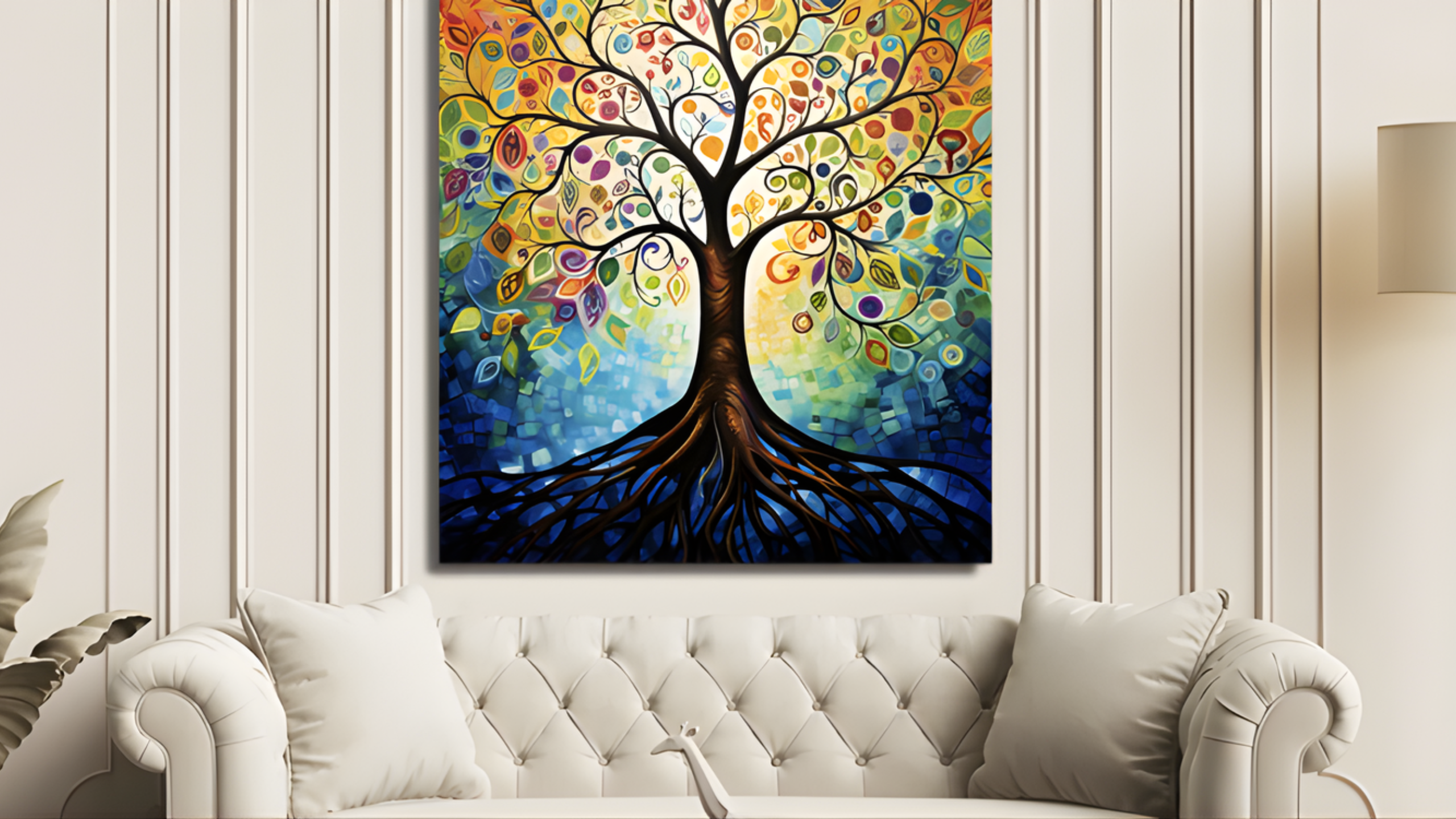
A better solution is to begin with one strong focal point. Oversized artwork works exceptionally well because it anchors the wall and simplifies the composition. A single large canvas instantly fills space without cluttering it. It creates structure, draws the eye, and reduces the need for additional décor.
When one piece confidently occupies the wall, the rest of the room can remain calm and balanced.
Respect Proportion and Scale
Scale is everything when decorating large walls. Artwork that is too small will make the wall feel even bigger and emptier. The key is proportion.
As a general rule, wall art should cover about 60–75% of the width of the furniture beneath it. For example, above a large sofa, the artwork should be wide enough to visually connect with the seating area. In tall spaces, vertical pieces can emphasize height, while panoramic artworks can widen the perception of a room.
Choosing the correct scale prevents the need to “fill gaps” with additional decorative items, which is often what leads to overcrowding.
Embrace Negative Space
One of the most overlooked design principles is negative space. Empty space is not wasted space; it is what allows focal elements to breathe.
When decorating large walls, resist the urge to cover every inch. A single large artwork surrounded by open wall area often feels more luxurious than a wall packed with frames and objects. Negative space enhances the impact of whatever you place on the wall.
High-end interiors frequently rely on simplicity. They use fewer elements, but each one is deliberate and impactful.
Choose Art That Adds Depth, Not Clutter
Texture and visual depth can make a large wall feel complete without requiring multiple pieces. Abstract canvases, layered compositions, or artworks with subtle tonal variations introduce movement and dimension.
Instead of creating a busy gallery wall, choose art that carries complexity within itself. A well-designed piece can offer interest from a distance while revealing detail up close. This layered visual experience eliminates the need for excessive decoration.
For homeowners looking for large-format contemporary pieces designed to make a statement without overwhelming a room, curated collections like those at Musa Art Gallery | Official provide examples of how scale and simplicity can work together harmoniously.
Keep Color Cohesion in Mind
Large walls naturally draw attention, so color choice matters. Bold tones can energize a space, while neutral palettes create calm sophistication. The key is cohesion.
If the room already contains strong colors, select artwork that echoes or complements them subtly. If the space is neutral, large artwork can introduce contrast without overpowering the environment.
Avoid mixing too many unrelated color schemes on one wall. Cohesion prevents visual overload and maintains harmony. Advertisement — Continue reading below
Avoid Over-Accessorizing
Shelves, mirrors, frames, clocks, and decorative objects can easily accumulate on large walls. While each item may seem small individually, together they can create clutter.
If you choose to incorporate multiple elements, ensure they are organized and aligned. Symmetry can help maintain order. However, in most cases, fewer pieces result in a more refined appearance.
Before adding another decorative item, step back and evaluate whether it truly enhances the space or simply fills it.
Consider Vertical Balance
Large walls often exist in rooms with high ceilings. In these cases, vertical balance becomes important. Instead of stacking numerous small pieces, consider tall artwork or vertically oriented compositions that draw the eye upward.
This approach emphasizes architectural features rather than distracting from them. Vertical artwork also elongates the perception of the space, making the room feel grand rather than crowded.
Use Lighting Strategically
Lighting plays a major role in preventing overcrowding. Properly illuminated artwork becomes the focal point naturally, reducing the need for additional wall décor.
Directional lighting, picture lights, or soft ceiling spots can enhance depth and texture. When artwork is highlighted effectively, it commands attention and simplifies the overall wall design.
Even minimal décor can feel complete when lighting is intentional.
Create Intentional Groupings If Needed
If you prefer multiple pieces rather than one large artwork, maintain structure. Gallery walls can work beautifully on large surfaces when curated thoughtfully.
Stick to a consistent frame style or color palette. Align edges carefully. Maintain equal spacing between pieces. Consistency keeps the composition clean rather than chaotic.
The difference between a stylish gallery wall and a cluttered one often lies in spacing and cohesion.
Think About the Room as a Whole
A large wall does not exist in isolation. Its decoration should connect with the rest of the room. Consider how furniture, rugs, and lighting interact with the wall design.
If the room already contains bold patterns or statement furniture, a simpler wall treatment may create better balance. If the furniture is minimal, the wall can carry more visual weight.
Design harmony emerges when all elements feel interconnected rather than competing.
Final Thoughts
Decorating large walls is less about filling space and more about defining it. Overcrowding happens when we attempt to compensate for size with quantity. Instead, focus on proportion, cohesion, and intentional focal points.
A single oversized artwork, thoughtful use of negative space, strategic lighting, and controlled color choices can transform an expansive wall into the most striking feature of a room. When done correctly, the wall enhances the atmosphere without overwhelming it.
Large walls are not challenges to solve — they are canvases waiting for confident, well-considered design decisions.