

This article is part of the HOGDigest editorial series. → Explore HOGDigest
In the United States alone in 2022, we experienced more than 180 major power outages, leaving millions of solar-powered homes without power, despite having rooftop arrays. This paradox exposes a fundamental flaw: conventional grid-tied solar rooftop systems are required by law to shut off during a power outage, whether or not the panel system has the ability to do so and leaving you powerless when you need power. With climate change causing a 64% rise in weather-related outages since 2000, the risk for outages keeps rising. Recent disasters, such as California's wildfires and Texas's winter storms, have revealed how unprepared the vast majority of solar homeowners are for extended periods without power. When the power goes out, your home solar system is reduced to expensive roof ornaments, and unless you've got backup systems cued up, your home stays dark. The question is not whether you will have a major outage, the question is when. Who wants to have your large solar investment sitting there and not able to be used during these more and more common emergencies? Now is the time to close this critical gap, before the next crisis arrives.
The Critical Gap in Grid-Tied Solar Systems
Most homeowners are surprised to learn that their solar panels go dark when the grid goes down, and for good reason: It seems madly counterintuitive, a perverse result of rules designed to keep a badge of ecology from frying a would-be Good Samaritan. This gaping hole in solar production would seem to mean that even on the sunniest days, your pricey solar array would be rendered useless in the event of a blackout, right? According to recent stats, the average American is subjected to 8 hours of power outages per year; some areas have over 60 hours per year! Households with solar experienced up to 7 days without power despite ideal solar generation in the midst of California's 2020 wildfire season. Between solar opportunity and practicality in an emergency, there is a void here, and it is a big one – a 10kW system has the technical possibility of delivering 40-50kWh per day to operate an entire home in an outage, yet in reality, it gives zero usable power. Sarah Chen, a homeowner in San Diego, learned that lesson the hard way during the power outages that accompanied the 2021 heat wave: "We had $30,000 worth of solar panels on our roof just sitting there making nothing while all of our food went bad and we sat in 95-degree heat. No one said we had to buy other equipment to make the solar work during outages."
Essential Features for Solar Backup Systems
Solar Panel Compatibility: Non-Negotiable Integration
A good solar backup system should be one that harmoniously works with your current solar array through accurate inverter synchronization. For state-of-the-art systems of the art systems DC voltage range and power must be matched carefully to maximize energy collection. AC Coupling provides an easier retrofit to existing installs, whereas DC coupling achieves overall better system efficiency. Main integration points are a correct voltage window match, compatibility with MPPT controller, and compliance with rapid shutdown features, among others. For older systems to be retrofitted, more power optimizers or microinverters may be needed in order to achieve grid failure stability.

Whole-Home Power Capabilities Demystified
Real continuous power exceeds just plain battery power ratings. Any strong backup system has to be able to handle not only the long-term power load but also the power surge that occurs when motorized appliances like refrigerators and air conditioners kick on. Basic circuits may need 5-8kW of constant power, but complete, at-home coverage will demand 12- 20 kW, depending on the size of your house and how the power is used. Longer outages require advanced load management to ensure the critical loads receive power while the non-essential loads are cycled to maximize runtime. Determine your required load by examining peak usage times and equipment startup needs. If you get a properly sized system, you should have 24-hour power for the essentials while still being able to handle larger loads during the day and produce power with the sun to help recharge the batteries.
Blackout Solutions Showdown: Generators vs. Solar Batteries
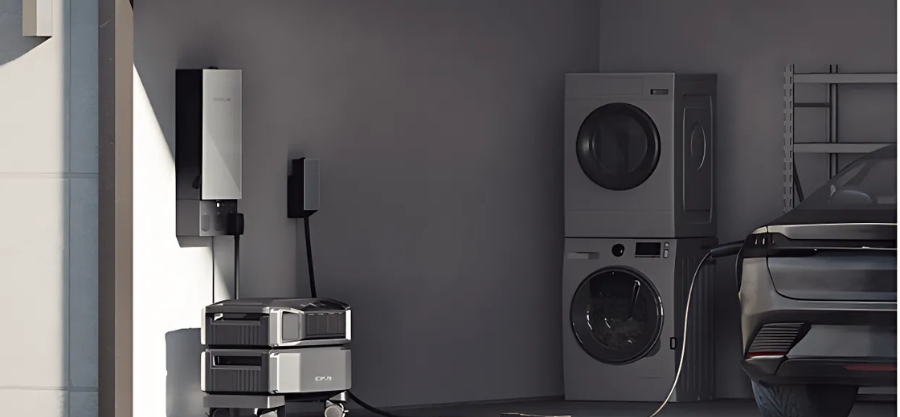
Conventional generators have always been the king of emergency electric power, providing instant, on-demand power to your home or business. Their reliance on limited fuel makes them extremely vulnerable to long outages when supply chains break down. Contemporary solar battery systems, such as EcoFlow's, will help mitigate against this vulnerability by storing renewable energy, but depending on setup costs often higher. A 10kW generator usually needs $200-300 ($100 in fuel) to operate and maintain each month, and similar solar batteries might just need some software updates. Over five years, solar batteries are a better bargain, at an average of $0.15 per kWh, compared with generators at $0.38 when you account for fuel, maintenance and replacement. Hybrid solutions of the two technologies ensure ultimate resilience – solar batteries are on hand to operate day to day, whilst generators provide emergency backup during longer bouts of cloudy weather. The upkeep contrast is striking: generators require a quarterly oil change, filter replacement and test run, while battery systems need only a once-a-year check. According to John Martinez, an emergency preparedness consultant, "After Hurricane Irma, my clients with solar batteries kept the lights on for weeks, while generator owners were lined up waiting for fuel after day three. These factors made solar storage a self-sustaining asset during infrastructure failure."
Implementation Roadmap: From Vulnerability to Resilience
Step 1: Power Audit & Solution Matching
Start your path to energy independence with an extensive power audit. List all critical appliances and their power needs, including medical devices, refrigeration, and heating/cooling systems. Determine your daily energy consumption behavior by analyzing monthly electricity bills and smart meter data. Compare this to the output of your solar array, to determine any shortcomings in outages. To get the proper size, think about seasonal changes and worst case scenarios such as multi-day storm periods.
Step 2: Seamless Installation Process
Installation by professionals provides seamless integration with your current solar setup and home electrical panel. You will also need to install an automatic transfer switch to isolate your home from the utility grid during an outage to stop backfeeding. Although do-it-yourself installation may appear to be easy on the budget, most areas mandate that licensed electricians perform modifications that involve backup power. The essential safety standards are UL 1741 for inverters and IEEE 1547 for grid connections. It only requires 1-2 days to install, so you don't have to worry about interruptions to your house's power source.
Step 3: Maintenance & Optimization
State-of-the-art backup systems have complex self-testing mechanisms built in that exercise weekly testing surveys to ensure the system is fully operational. Have at least four reviews a year to review the system response during simulated outages. Automatically update firmware to maintain optimal performance and support the latest grid requirements and security standards. Integrate with management systems (for example, your building management system) to monitor battery status, which can be used to accurately estimate when the battery capacity will degrade, and therefore improve battery charging. If you plan to add more solar panels or use more batteries in the future, upgrade the battery for the solar power system. Regular upkeep consists mostly of verifying connections are solid and cleaning any exposed parts, involving some 2-3 hours per year.
Securing Your Solar Investment: A Call to Action
America's clean energy future has a key weakness: the grid-tied solar systems that deliver little to no power during a blackout. And with climate change on the rise and causing up to 50% more severe weather events by 2030, we will only experience more frequent, longer power outages. Without adequate backup solutions, your solar investment becomes worthless just when you need it most. Technology that can deliver what's needed already exists – from batteries to other power sources able to keep the system in operation during a disruption. The price of inaction pales by comparison to the cost of taking action to protect the health of our communities and families — a lesson countless solar homeowners learned in past disasters. Don't wait for the next big blackout to cast a spotlight on your home's exposure. You can take steps now: Start with a power audit, talk to experienced installers, and put in place a reliable backup system that fits your requirements. Your investment in solar was an investment in peace of mind — your family and home also deserve the security of having the lights stay on, regardless of what mother nature throws your way.