

This article is part of the HOGDigest editorial series. → Explore HOGDigest
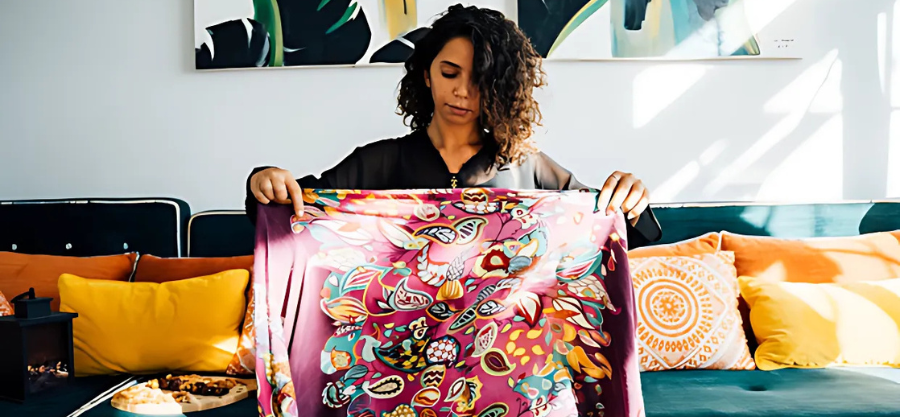
https://www.pexels.com/photo/a-woman-holding-a-colorful-headscarf-8712892/
The furniture you incorporate into your home can completely transform its aesthetic and make it personal to your style. This makes your home’s interior constantly evolve, as your tastes will adapt over time meaning that you’re likely to purchase new furniture and remove the old ones. Old furniture is often thrown into landfills or given away, but what if I told you that your old furniture can be repurposed into many different things? Well, one of these unique upcycling uses is turning your old furniture into unique garments that you can wear all year round.
This guide will hopefully inspire you to reuse your old furniture and turn it into statement fashion pieces. Continue reading to find out more about this sustainable styling method.
What Furniture Can Be Used For Clothing?
Upholstery
Sofas, armchairs, dining chairs and headboards often have significant amounts of high-quality fabric that are perfect for multiple types of clothing, such as dresses or T-shirts. Look for interesting textures, patterns or durable weaves like velvet, brocade, linen or even leather if you want the most effective garments. These materials are designed to be long-lasting and durable, which is why they’re used for upholstery furniture.
Cushions
Cushions are excellent for transforming into clothing, as they come in such wide varieties of patterns and textures that can be used for many garments. If you have many cushions with the same pattern and texture, you can complete a full look that will be very satisfying. Most cushions are made from thicker materials that can be perfect for a jacket, so you’ll keep warm during the winter months.
Curtains
Turning old curtains into clothing is a fantastic way to upcycle fabric, offering a sustainable and creative path to unique garments. Curtains often come in substantial yardage, with interesting prints, luxurious textures or durable weaves that aren't always available in standard fabric stores. This helps you to achieve a unique look that isn’t easily seen anywhere else, so you’ll always be the talk of the town. Many curtains are also lined. This lining fabric can often be repurposed for your new garment if suitable
Metal Accents
Small, smooth wooden pieces or decorative metal elements could potentially be incorporated as unique embellishments, buttons or structural details in different clothing pieces. You can also use old hinges, screws or fastenings in furniture as unique jewelery. For those with a bold or eclectic style, a pair of miniature, aged brass hinges meticulously cleaned and attached to earring hooks could make for an exceptionally distinctive set of earrings.
Seat Straps/Webbing
Strong webbing from the underside of seats can be used for belts, bag straps or decorative elements, as they are built to last and will be high-quality for long periods of time. Seat straps can also be used if you’re designing or repairing men’s smart trainers due to their high durability. It can also give you a unique footwear design too.
What To Consider When Making Clothing From Furniture
Safe Assembly
Gather necessary tools such as staple removers, pliers, screwdrivers, utility knives and fabric scissors before creating your garments. Prioritise safety by wearing gloves and eye protection, and be mindful of sharp staples, nails and splintering wood that can be found in couches and other types of furniture. You can then proceed with careful deconstruction, slowly removing the unwanted pieces from the furniture. Aim to keep fabric pieces as large and intact as possible, particularly if you intend to repurpose them for garments.
You should also thoroughly clean furniture fabrics. Depending on the material, this may involve vacuuming, spot cleaning, steam cleaning or professional dry cleaning to eliminate any lingering odors or stains.
Designing Your Garments
When designing your garment, leverage existing features to give you a more unique look. Consider the weight of the fabric too, as heavier curtain fabrics are suitable for structured designs like A-line skirts, tailored trousers, blazers or bags, while lighter sheers are ideal for flowing dresses or loose tops. If your curtain has a repeating pattern, meticulous pattern matching at the seams will ensure a professional finish.
You also need to choose a sewing pattern that complements the amount and type of fabric available. Keep in mind that basic, simple patterns often work best with heavily patterned or very thick curtain fabrics.
Construction Techniques
Select an appropriate needle and thread for your fabric type. Given that curtain and couch fabrics can fray easily, employ robust seam finishes such as French seams, serged edges or zig-zag stitches to prevent unraveling. Pressing seams open or to one side as you sew is crucial for achieving a professional appearance, especially with thicker fabrics. Once you have the perfect shape for your garment, you can then start with personalisation to give it that extra touch of uniqueness.
Final Thoughts
Transforming old furniture into unique garments is a powerful statement of sustainable style. It allows you to create truly one-of-a-kind pieces while significantly reducing waste and improving finances. By carefully selecting and preparing materials like upholstery fabric, you can unlock a wealth of creative possibilities. This innovative approach not only breathes new life into forgotten items but also challenges conventional fashion consumption.
Author Bio: Darcy Fowler

After completing a University degree in Journalism, Darcy Fowler has dedicated a lot of time to interior design, exterior design and home decor, completing multiple home design projects in the process. Darcy is determined to provide interesting and insightful content with the hope of inspiring others. She has a big ambition to establish herself in the world of home renovation and design journalism.