

This article is part of the HOGDigest editorial series. → Explore HOGDigest
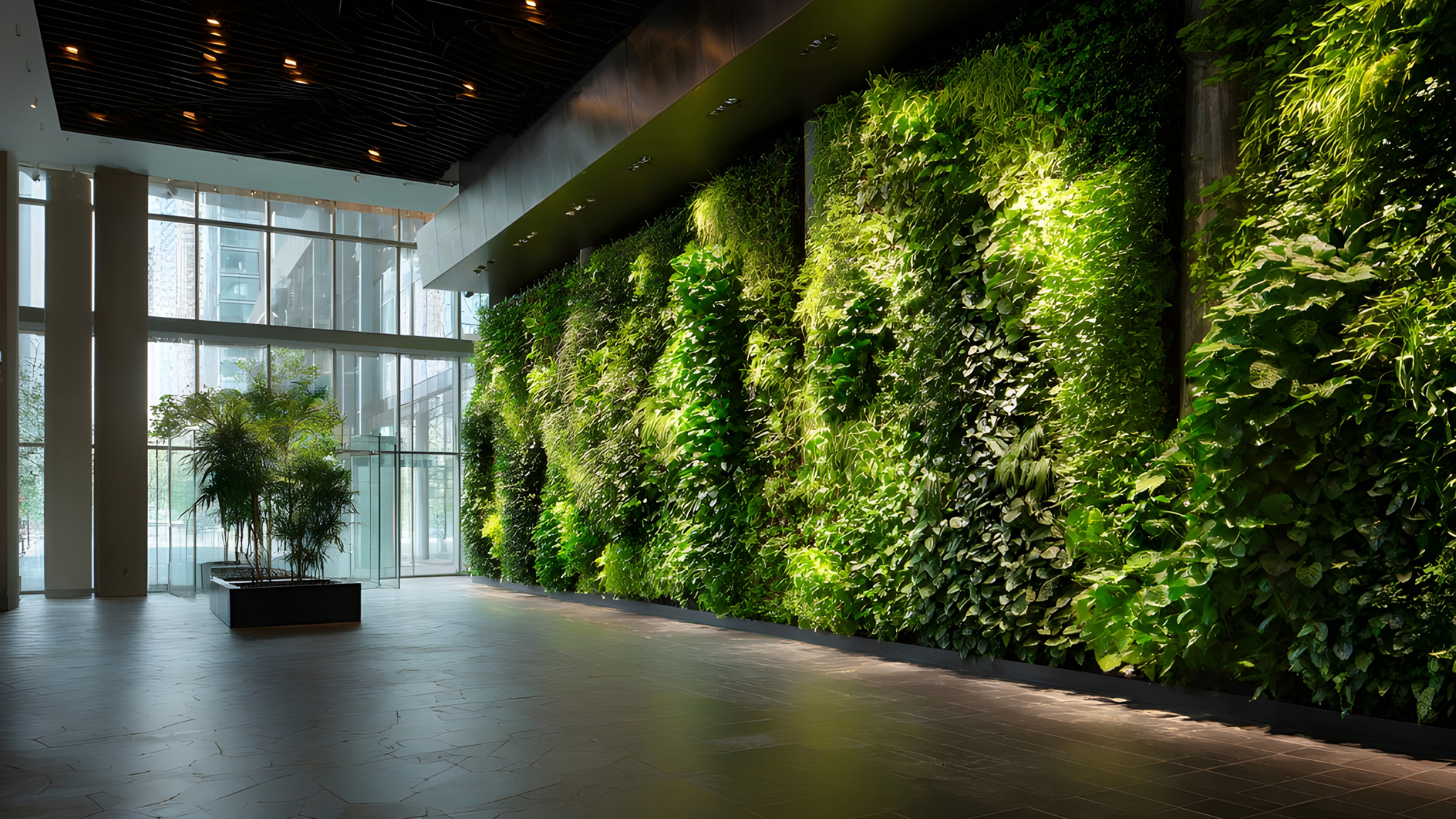
Walk past a hotel lobby with a lush green wall, then drive by an office building with a similar setup on its exterior, and you'd assume the two use the same material. They don't. The resin blend, the frame behind the leaves, and even the fire safety compliance differ enough that swapping one for the other usually ends in fading, warping, or a failed inspection within a year or two.
Synthetic foliage has come a long way from the stiff, plastic-looking hedges of a decade ago, but the engineering underneath still splits sharply along one line. Is this panel going to sit behind glass, or is it going to take a direct hit from July sun and January frost?
What the Plastic Itself Is Made Of
Outdoor-rated panels are almost always built from high-density polyethylene, known as HDPE, blended with hindered amine light stabilizers (HALS) while the resin is still molten. Peer-reviewed testing on HDPE filaments has shown that samples without any stabilizer lose nearly all of their toughness after just 300 hours of simulated sun exposure, while HALS-treated resin holds up for several times that. That's the difference between leaves that stay pliable for years and ones that turn brittle and snap off within a single summer. An artificial green wall rated for exterior use typically carries this UV package baked into the resin itself, not sprayed on afterward, which matters because coatings wear off and internal stabilizers don't.
Indoor panels skip all of that. Since window glass already filters out most damaging UV wavelengths, manufacturers lean on low-density polyethylene, silk blends, or woven fabric instead, materials chosen for how convincingly they mimic vein detail and leaf texture up close rather than for weather resistance they'll never need.
Frames, Drainage, and What Happens When It Rains
An exterior wall has to deal with water constantly, and if that water gets trapped behind the panel instead of running off, mold and wall damage follow fast. That's why outdoor systems use open plastic grids or coated steel backing that lets rainwater drain straight down rather than pooling against the siding. Good outdoor mounting hardware also incorporates a small margin of flex, since aluminum and steel frames expand and contract across hot summers and hard freezes, while rigid mounts crack under that stress over a few seasons.
Indoor backing doesn't need any of this. It's built light, mostly for one job, mounting quickly and evenly onto drywall, plaster, or a wood accent wall without adding unnecessary weight to the structure.
The Fire Code Question Nobody Thinks About Until It's Too Late
This is where a lot of buyers get caught off guard. Commercial interiors (hotels, restaurants, offices, retail spaces) almost always fall under fire code requirements for decorative materials, and artificial greenery isn't exempt. Two standards come up constantly. NFPA 701 tests how freestanding decorative material reacts to direct ignition, while ASTM E84, the Steiner Tunnel Test, governs how a material behaves as a surface finish if flame spreads across it. Most jurisdictions apply NFPA 701 to standalone artificial trees and greenery through International Fire Code Section 807.4, while ASTM E84's Class A rating becomes relevant when foliage functions more like a wall or ceiling finish.
The distinction that actually matters for a buyer is this: Inherently fire-retardant materials have the flame-resistant compound built into the plastic resin during manufacturing, while cheaper alternatives rely on a surface spray that wears off with cleaning and sun exposure over a year or two. A fire marshal doing a walkthrough won't accept "it used to be treated" as an answer. Panels sourced through Green Warehouse are built to meet these standards from the manufacturing stage, rather than relying on a topical fix.
Keeping Either One Looking Good
Indoor foliage mostly fights dust, not weather. A microfiber cloth pass or a round of compressed air every couple of months keeps leaves looking sharp, since there's no rain to do that job for you. Outdoor panels get help from the weather, but also collect more grime because of it; pollen, dirt, and airborne debris build up over a season. A garden hose and a mild soap solution clear that without stripping the UV coating underneath, though pressure washers and harsh solvents are worth avoiding since they can degrade the stabilizer layer faster than sunlight alone would.
Choose the Right Artificial Green Wall for Long-Lasting Results
Artificial greenery can completely transform a space, but choosing the wrong type of panel for the environment can quickly turn a design investment into a maintenance problem. Indoor and outdoor artificial green walls may look similar at first glance, yet their materials, structural systems, UV protection, drainage capabilities, and fire safety requirements are designed for very different conditions.
Before purchasing artificial foliage, consider exactly where it will be installed and what environmental challenges it will face. A decorative feature wall inside a hotel lobby, restaurant, office, or residential living room has very different requirements than an exterior installation exposed to direct sunlight, rain, wind, dust, and changing temperatures.
For indoor projects, appearance, texture, and fire compliance are often the highest priorities. High-quality foliage should complement the surrounding interior design while meeting applicable safety requirements for commercial spaces. Lightweight construction can also make installation easier on drywall, wood, plaster, and other interior surfaces.
Outdoor installations require additional protection. Panels designed for exterior use need durable materials that can withstand ultraviolet exposure, moisture, temperature changes, and seasonal debris. Proper drainage and flexible mounting systems are equally important for preventing water buildup and reducing stress caused by expansion and contraction.
That is why working with a reliable supplier can make the selection process much easier. Green Warehouse provides artificial greenery solutions designed for different environments, helping homeowners, designers, architects, and commercial property owners choose products suited to their specific installation requirements. Read more about home improvement.
Instead of selecting panels based only on appearance, take the time to evaluate important factors such as UV stabilization, fire-retardant construction, backing materials, drainage design, mounting requirements, and expected exposure to weather. These details may not always be visible from the front of a foliage panel, but they play a major role in determining how long the installation will maintain its appearance and performance.
A well-planned artificial green wall can become much more than a decorative feature. It can create a welcoming hotel entrance, add privacy to an outdoor patio, improve the atmosphere of a restaurant, soften a modern office environment, or introduce natural-looking texture into a residential space without the constant maintenance required by living plants.
The key is matching the product to the location. Indoor panels should provide realistic visual appeal and appropriate fire safety performance, while outdoor systems must be engineered to withstand years of environmental exposure. Making the right decision from the beginning can help prevent premature fading, brittle foliage, drainage problems, and expensive replacement costs.
If you are planning a new artificial greenery project, explore the available options from Green Warehouse and compare the features that matter most for your installation. Whether you are designing a small interior accent wall or covering a large exterior surface, selecting purpose-built materials will help create a cleaner, safer, and more durable result.
Start planning your artificial green wall today and choose a solution designed not only to look impressive on installation day but also to maintain its appearance and performance for years to come.
If you're mapping out how a green wall fits into a broader room plan, balancing furniture placement, material choices, and overall layout, the room-by-room furnishing walkthrough is a useful next stop before you commit to a final design.