

This article is part of the HOGDigest editorial series. → Explore HOGDigest
A diamond, ruby, or sapphire may be the first thing people notice in estate jewelry, but it is rarely the whole story. Two rings with similar stones can bring very different prices because value often sits in the details around the center stone: the era, the maker, the cut, the condition, and the way the piece fits today’s market. That matters if you are settling an estate, dividing assets, downsizing, or deciding whether a single item belongs in a private sale, an estate sale, or auction consignment.
Estate jewelry valuation works best when you treat the piece as an object with a history, not just a bundle of materials. Metal weight and gemstone quality still matter. So do signatures, original settings, old cuts, repairs, provenance, and wear. A careful review can change the answer substantially.
Stone value is only the starting point
Most people assume jewelry value begins and ends with gem size and quality. In practice, appraisers and auction specialists look at the whole object. A one-carat diamond in a generic modern mounting may trade very differently from a smaller diamond in a signed Art Deco ring with strong period design.
This is one reason quick verbal opinions can mislead families. A walkthrough estimate for sale planning is not the same thing as a formal written appraisal for tax, insurance, or legal use. Those serve different purposes and may use different valuation standards. If an estate requires documentation, it is worth understanding what type of appraisal is actually needed before relying on a number.
Why era can change the answer
The period a piece comes from affects desirability, craftsmanship, and rarity. Jewelry from the Victorian, Edwardian, Art Deco, Retro, and mid-century periods tends to be judged against the design language of its own time, not against modern mass-market jewelry.
Design tells you what the market may see
Art Deco pieces, for example, often attract buyers because of geometry, fine milgrain work, caliber-cut stones, and strong platinum settings. Edwardian jewelry may be prized for delicacy and openwork. Mid-century designs can appeal for bold gold forms, asymmetry, and recognizable postwar style. Even when the center stone is modest, period design can make the piece more desirable than its raw gem content suggests.
Era also affects what should and should not be altered. Resizing, replacing a clasp, or swapping out a stone may seem minor, but changes that erase period character can reduce appeal. Originality matters, especially in stronger design periods.
Maker and signature often matter more than owners expect
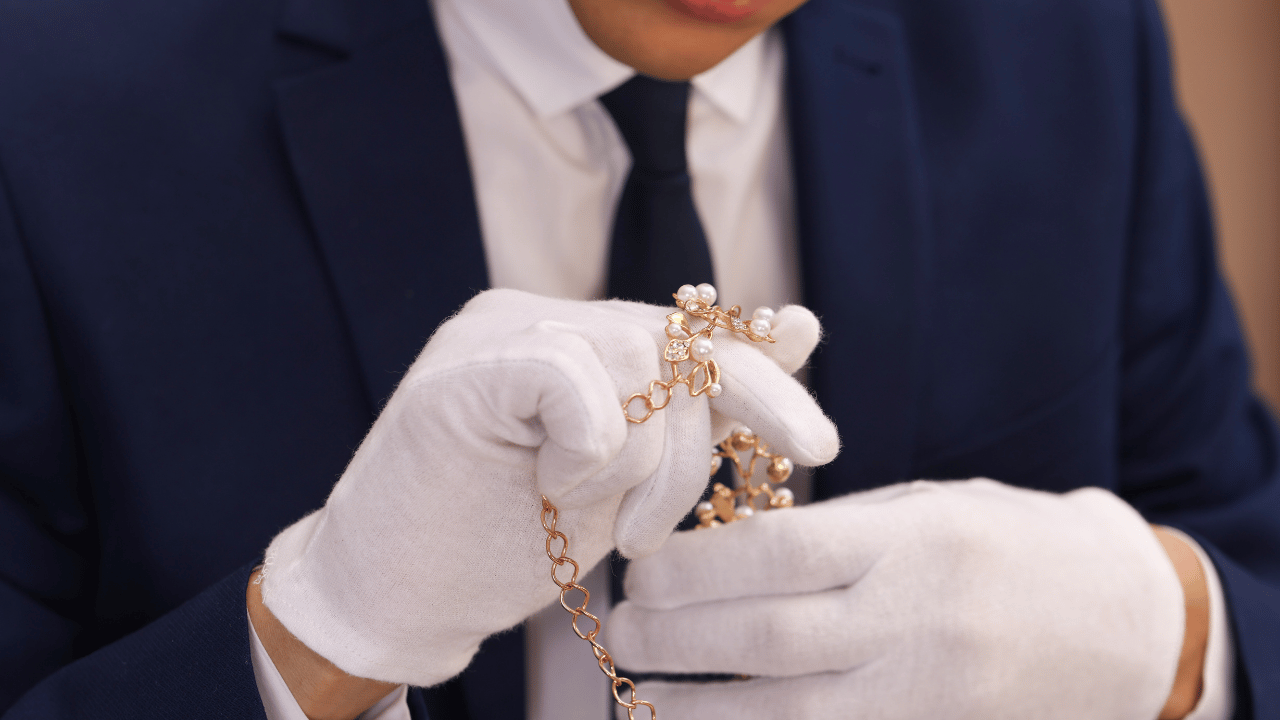
A signed piece from a known maker can carry a premium that has little to do with gemstone weight. Buyers often pay for authorship, workmanship, and confidence in authenticity. Names such as Tiffany & Co., Cartier, Van Cleef & Arpels, Buccellati, or David Webb are obvious examples, but lesser-known regional or workshop makers can matter too.
What specialists look for
- Maker’s marks and hallmarks: These can identify manufacturer, metal fineness, country of origin, or workshop.
- Period consistency: The signature should make sense for the construction, materials, and era.
- Quality of fabrication: Hand finishing, hinge construction, stone setting, and clasp design all offer clues.
- Original boxes or paperwork: These do not create authenticity by themselves, but they can support it.
Signed jewelry also raises a practical issue for families: cleaning or repair before sale should be approached carefully. An aggressive polish can soften engraving or remove surface character. Replacing original parts with modern substitutes can do more harm than good.
Cut is not just about sparkle
Cut affects value in ways that go beyond brilliance. In estate jewelry, the style of cut can reveal age, influence rarity, and shape buyer interest. Old mine cut and old European cut diamonds, for instance, are not simply “older versions” of modern round brilliants. They have different faceting patterns, proportions, and visual character.
Old cuts and modern expectations
Some buyers actively seek antique-cut stones because they prefer broader flashes of light and period authenticity. Others compare them unfavorably to modern precision cutting. That means valuation depends partly on context. An old European cut diamond in its original early 20th-century mounting may be more compelling left intact than removed and valued as a loose stone.
Colored stones raise similar issues. Antique sapphires, rubies, and emeralds may be cut to preserve weight rather than maximize modern brilliance. Native cuts, sugarloaf cabochons, step cuts, and mixed cuts can all influence value differently depending on the piece, the quality of the material, and current demand.
Condition can add or subtract quickly
Condition is one of the fastest ways value changes, and it is often underestimated. Estate jewelry is worn. Prongs thin out, shanks go out of round, clasps loosen, links stretch, enamel chips, and stones abrade. Some wear is expected. Some crosses the line into a repair issue that affects marketability.
Common condition problems that matter
- Stone damage: Chips, abrasions, cavities, and repolishing history.
- Mounting wear: Thin prongs, cracked galleries, worn bezels, or weak hinges.
- Alterations: Replaced stones, converted brooches, shortened necklaces, or rebuilt ring shanks.
- Missing parts: Safety catches, earring backs, accent stones, or detachable elements.
- Over-restoration: Heavy polishing, fresh plating, or repairs that erase original detail.
Condition can be especially important in signed pieces and in jewelry from highly collected periods. A later replacement diamond in a Deco ring may be perfectly wearable, but collectors may discount it if the replacement changes the look or weakens the period integrity.
Materials and workmanship still matter, just not by themselves
Metal type, gemstone identity, and craftsmanship remain essential. Platinum, high-karat gold, natural pearls, fine jade, untreated colored stones, and hand-fabricated settings can all strengthen value. But these factors need context. A heavy gold bracelet may be worth little more than scrap if the design is generic and damaged. A lighter piece by a known maker may be worth much more because the market is buying design and authorship, not just metal.
This is one reason experienced estate firms in areas like Pasadena, San Marino, and Beverly Hills often sort jewelry into categories before discussing sale method. Some pieces belong in a broad household liquidation. Others deserve individual research, photography, and targeted marketing through specialized auctions.
Provenance helps, but only when it is real and relevant
Provenance means documented history of ownership or origin. It can help, but families often overestimate what counts. A story about a ring being “from Paris” is not the same as a receipt, period photograph, maker documentation, or a traceable family record.
When provenance does exist, keep it with the piece. Boxes, receipts, old appraisals, letters, and photographs can all be useful. They may not change value on their own, but they can support attribution, dating, and buyer confidence. That is especially true for signed jewelry, Hollywood-related material, and unusual custom work with a local Southern California history.
Why sale context affects valuation
Jewelry does not have one universal value. It can have a retail replacement value, an insurance value, an estate reporting value, a dealer buy price, and an auction estimate, all of which may differ. That is not a contradiction. It reflects different markets and different purposes.
For estate sellers, the practical question is often not “What is it worth in theory?” but “What is the right venue for this piece?” A single signed bracelet, a fine period diamond ring, or a strong group of watches may do best with specialized handling. A tray of commercial gold jewelry may call for a different approach. Firms with long experience in estate jewelry, including Hughes Estate Sales & Auctions, often separate these categories early because one-size-fits-all pricing leaves money on the table for some items and wastes time on others.
What sellers should gather before asking for a valuation
A better valuation starts with better information. Before handing over a jewelry box, gather what you can without cleaning or repairing anything first.
- Sort by type: Rings, bracelets, brooches, watches, loose stones, and matched sets.
- Keep documents together: Receipts, old appraisals, lab reports, and boxes.
- Note known history: Who bought it, when, and whether stones were replaced or reset.
- Do not polish aggressively: Dirt can be removed safely later. Lost detail cannot.
- Flag urgent deadlines: Estate administration, escrow, or trust distribution can affect next steps.
That preparation does not turn a family member into a gemologist. It simply gives the evaluator a cleaner starting point and reduces the odds of an important detail being missed.
The right question is not “What is the stone worth?”
The better question is, “What exactly is this piece, and who is the likely buyer for it?” Once that is clear, the valuation gets sharper. A ring may be valuable because of its old cut diamond, because it is a signed mid-century design, because it survived with little alteration, or because all of those things come together in one object.
That is why estate jewelry deserves a slower look than the usual kitchen-table guess. The stone matters. So do the era, the maker, the cut, the condition, and the paper trail. Miss any one of those, and the number can be off by a lot.