

This article is part of the HOGDigest editorial series. → Explore HOGDigest
You don't need a backyard or a spacious balcony to grow fresh herbs at home. Even a compact apartment offers plenty of room. With the right setup, a sunny windowsill, kitchen counter, or plant shelf can easily become a productive growing space. Choose herbs suited to your space, then give them proper containers, light, and water. With these basics, growing your own herbs becomes simple.
Choose the Right Herbs
Start with herbs that suit your space and growing conditions. Some herbs can stay relatively compact, while others can spread quickly. Basil, chives, parsley, cilantro, mint, thyme, and oregano are all suitable choices for a small indoor garden. If you're new to growing herbs indoors, start with two or three varieties. This gives you a chance to learn how much light and water they need before adding more plants.
When selecting herbs for an apartment, consider not only their size but also their growth habits and maintenance needs. Fast-growing or spreading herbs may require more frequent pruning, while compact varieties are easier to manage in limited spaces. Choosing herbs you regularly use in cooking can also make your indoor garden more practical and rewarding.
Find a Sunny Spot
Once you've chosen your herbs, find a suitable place for them. Most herbs need plenty of light, so a sunny windowsill is one of the easiest options. A south-facing window usually receives the most sunlight, while east- and west-facing windows can also work well. If your window is dim or natural sunlight is insufficient, use a grow light to supplement it. A low-power LED grow light is sufficient; it's inexpensive yet provides ample light for your plants.
If you're looking for a reliable LED grow light brand, consider Mars Hydro. The company has been developing LED grow lights for 17 years, and the Mars Hydro 17th Anniversary celebration includes great deals.
Keep your herb plants close to a bright window where they can receive consistent light throughout the day. Rotate the pots occasionally so all sides of the plants receive adequate light and the stems grow evenly. If plants become tall, weak, or noticeably lean toward the window, it may be a sign that they need more light.
Utilize Vertical Space
Limited floor space doesn't mean you can only grow a few herbs. Look upward and make use of walls and shelves.
A wall-mounted shelf can hold several small herb pots while leaving your counter and floor clear. A small multi-tiered plant stand can also let you grow several herbs within the footprint of just one or two pots.
Hanging planters are another option if you have a suitable place to hang them. Trailing herbs can work particularly well in hanging containers, although you should make sure the structure can safely support the weight of the planter, soil, and water.
Vertical gardening is particularly useful for apartment dwellers because it increases growing capacity without taking up valuable floor space. Narrow shelves, tiered stands, and wall-mounted planters can transform unused areas into functional herb-growing zones. Just make sure every plant remains easy to reach for watering, pruning, and harvesting.
Choose Well-Draining Pots
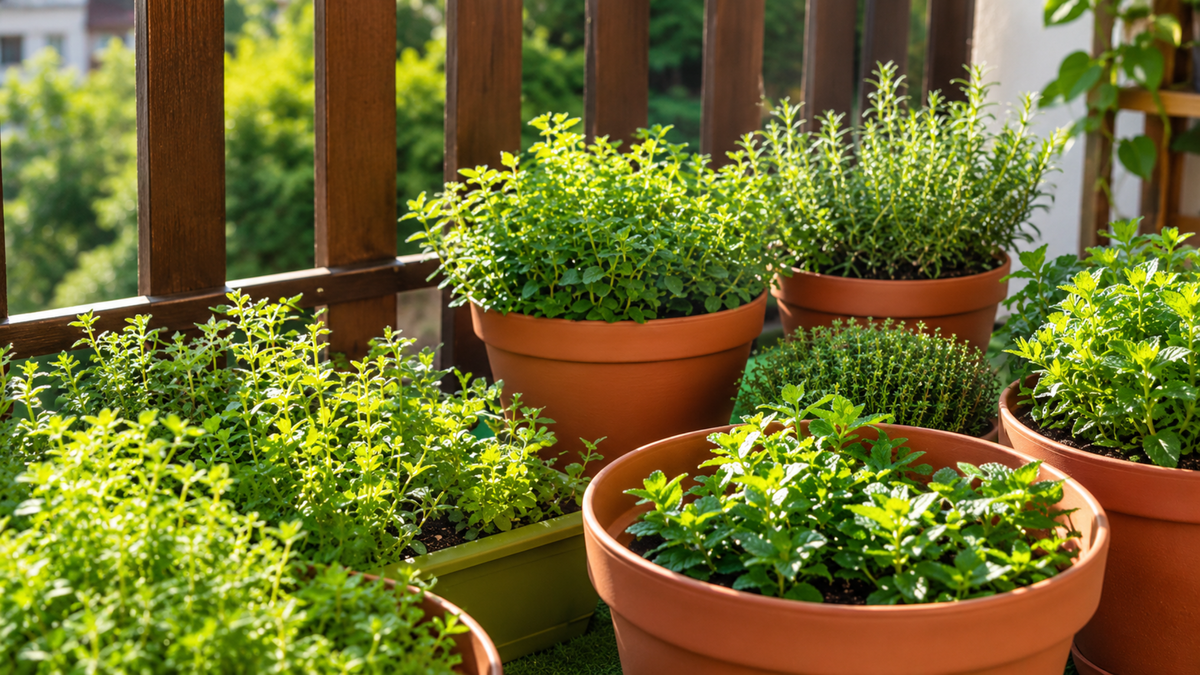
Choose pots that provide enough room for the roots and have drainage holes at the bottom. You can grow individual herbs in separate pots or place several herbs in a larger container if their growing requirements are similar. When watering, place a saucer or tray beneath each pot to catch excess water. This is especially important when growing herbs on furniture or windowsills because water can damage the surface.
The container material and size can also affect how well your herbs grow. Terracotta pots, for example, allow moisture to evaporate more easily, while plastic or glazed containers tend to retain moisture longer. Choose a container based on how quickly the soil dries in your apartment and always ensure that excess water has a way to escape.
Water Properly
Overwatering is one of the most common problems with indoor herbs. Check the soil before watering. Push your finger about an inch into the soil. If it feels dry, it's generally time to water. If it still feels moist, wait a little longer. When you water, do it thoroughly until some water runs out of the drainage holes. Let the excess water drain completely, then empty the tray underneath. Avoid leaving the roots sitting in water.
Indoor environments can vary significantly in temperature and humidity, so a fixed watering schedule is not always reliable. Factors such as sunlight, heating, air conditioning, pot size, and soil type can affect how quickly the soil dries. Instead of watering simply because it is a particular day, check the moisture level regularly and adjust your routine accordingly.
Harvest Regularly
Regular harvesting can also encourage some herbs to produce more new growth. For leafy herbs such as basil and mint, pinch or cut the stems just above a pair of leaves. Don't remove too much foliage at one time, especially if the plant is still small. For herbs such as chives, you can cut the leaves as needed while leaving the plant base intact so it continues producing new growth.
Harvesting your herbs at the right time can help you enjoy fresh flavor while keeping plants manageable in a small growing area. Use clean scissors or pruning shears when cutting larger amounts, and harvest in a way that maintains the plant's overall shape. Regular trimming can also prevent some herbs from becoming overly tall or crowded.
Conclusion
Growing herbs in a small apartment is mostly about making good use of the space you have. Choose compact herbs, use containers with good drainage, provide enough light, and avoid overwatering. With a windowsill, shelf, or small corner, you can create a productive indoor herb garden.
An indoor herb garden can provide a convenient supply of fresh ingredients without requiring a large outdoor growing area. Even a few carefully selected pots can give you access to herbs for cooking while adding greenery to your home. As you become more comfortable with indoor gardening, you can gradually experiment with additional herbs, containers, and growing methods.