

This article is part of the HOGDigest editorial series. → Explore HOGDigest
The entrance is the one part of a property everyone sees
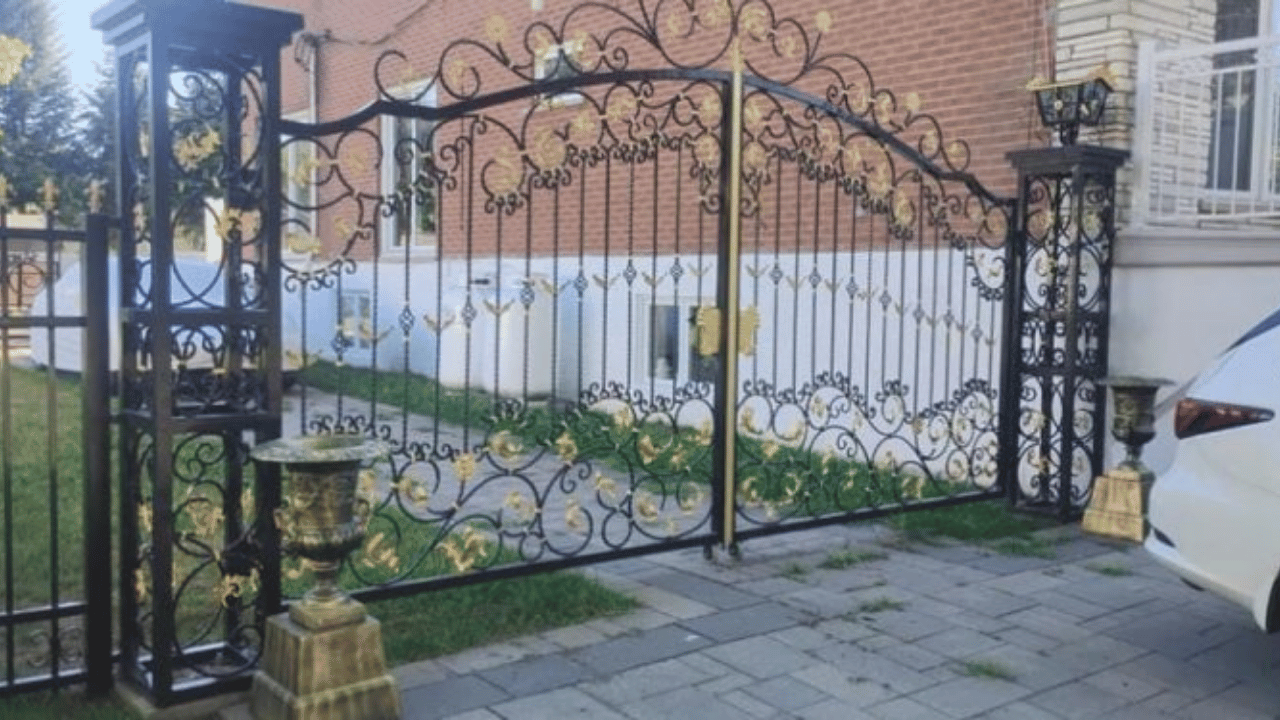
Long before a visitor reaches the front door, they pass through the gate, and that first impression tends to stick. Through a Canadian summer of landscaping and property work, the finishing touch on many rural driveways is a wrought iron gate across the entrance. It's the first thing a visitor meets and the last thing they pass, which is why its look carries as much weight as its security. A well-chosen gate signals that the rest of the property has been cared for with the same attention.
Splitting the Span Is What Makes Twenty Feet Workable
A twenty-foot opening is wide enough for a truck and trailer, but a single leaf that wide would be unwieldy and would sag under its own length. The longer a single panel gets, the more its own weight works against it, pulling at the hinges and bowing the frame over time. A bi-parting wrought iron gate halves the problem, hanging two ten-foot leaves that meet in the middle and share the load. Each leaf stays square, and each hinge post carries only half of what a single gate would demand. This division isn't just a structural convenience — it also makes day-to-day use easier, since a smaller leaf is lighter to push, easier to latch, and less likely to drift out of true.
A Swinging Leaf Needs Room the Driveway Has to Give It
Unlike a sliding gate, a swinging leaf sweeps an arc, and that arc has to stay clear of the slope, the fence line, and any parked vehicle. On rural properties, this is often overlooked until the gate is already installed and someone realizes a parked truck or a snowbank blocks the swing. Planning that swing before the posts go in keeps a wrought iron gate from scraping the driveway every time it opens. It also means accounting for grade changes — a driveway that slopes even slightly can cause the bottom of the leaf to catch unless the clearance is built in from the start. Proper measurements and careful planning also help prevent costly adjustments or repairs later.
The Posts Do More Work Than the Gate Itself
All the weight and leverage of a hanging leaf pass into the hinge post, which is why those posts are set deep in concrete. The gate itself may be the visible feature, but the post is what actually holds everything together. A post that shifts even slightly through a freeze-thaw cycle drops the leaf out of alignment, and the two halves stop meeting cleanly. In regions with harsh winters, this movement is not a small risk — frost heave can push a poorly set post out of plumb within a single season, so depth and concrete volume matter more than they might first appear to during installation and long-term use overall. Strong posts also reduce stress on hinges and latches, helping the entrance remain dependable for years.
Solid Forged Steel Is Why the Pattern Survives Outdoors
Ornamental scrollwork is only decorative until the weather tests it — a hollow, lightly tacked pattern begins to loosen within a few seasons. Rust, vibration, and temperature swings all work against a gate that wasn't built to hold its shape. Forged solid stock, joined properly, keeps the pattern rigid, so the gate reads as ironwork rather than decoration bolted onto a frame. The difference shows up years later, not on day one — a properly forged gate still swings true and looks sharp long after a lighter, tacked-together version has started to sag and rattle. Quality construction also gives the ornamental details a more substantial appearance.
Where the Two Leaves Meet Is a Detail Worth Getting Right
The center of a bi-parting pair is where any misalignment shows, since the eye reads the gap between the leaves instantly. Even a small inconsistency at the meeting point draws attention, more than almost any other part of the gate. A drop rod into the driveway holds one leaf steady so the other latches against it cleanly, season after season. Getting this detail right at installation — a level base, a properly seated drop rod, and a latch that aligns without forcing — saves years of adjustment down the line. It also gives the entrance a finished appearance.
Heavy Leaves Ask for a Few Sensible Habits
A leaf on a wrought iron gate carries real momentum, so it's walked open rather than swung, and children are kept clear of the closing edge. It's easy to underestimate how much force a moving gate leaf carries until it's in motion. Hinges are greased through the season, and the latch is checked, since a gate left to bind will eventually tear at its own fixings. These are small habits, but they're the difference between a gate that lasts decades and one that starts failing at the hardware within a few years. Regular inspection is especially useful after winter.
Driveway Gates Divide by How They Move
Single swing: narrow openings, one leaf
Bi-parting swing: wide spans, two shorter leaves
Sliding leaf: where no swing room exists
Where a Bi-Parting Design Wins and Where It Does Not
Strength: covers a wide span without a huge leaf
Strength: shares the load across two posts
Limit: needs clear arc on both sides
Limit: heavier leaves demand deep, solid posts
A property owner near Cochrane set the posts well back from the road so both leaves could open fully without ever reaching the shoulder — a simple adjustment that avoided years of tight, awkward swings and kept the entrance looking proportionate to the driveway itself. This kind of planning is particularly valuable on rural properties, where road access, snow clearing, trailers, and larger vehicles can influence how much operating space is available.
Rural Entrances Are Being Treated as Part of the Build
Owners increasingly plan the entrance alongside the driveway and landscaping rather than adding a gate years later as an afterthought. This shift makes sense: a gate installed after the driveway is finished often has to work around constraints — grading, existing fencing, drainage — that would have been simple to solve earlier. That planning is why the ornamental ironwork TMG Industrial supplies is sized around the opening and the swing from the beginning, so the gate fits the property rather than the property being adjusted around the gate.
A well-planned entrance does more than control access. It connects the driveway, fencing, landscaping, and architecture into one finished look while providing the strength needed for daily use. For wide rural driveways, a properly designed bi-parting wrought iron gate can therefore be both a practical solution and a defining architectural feature.
.