

This article is part of the HOGDigest editorial series. → Explore HOGDigest
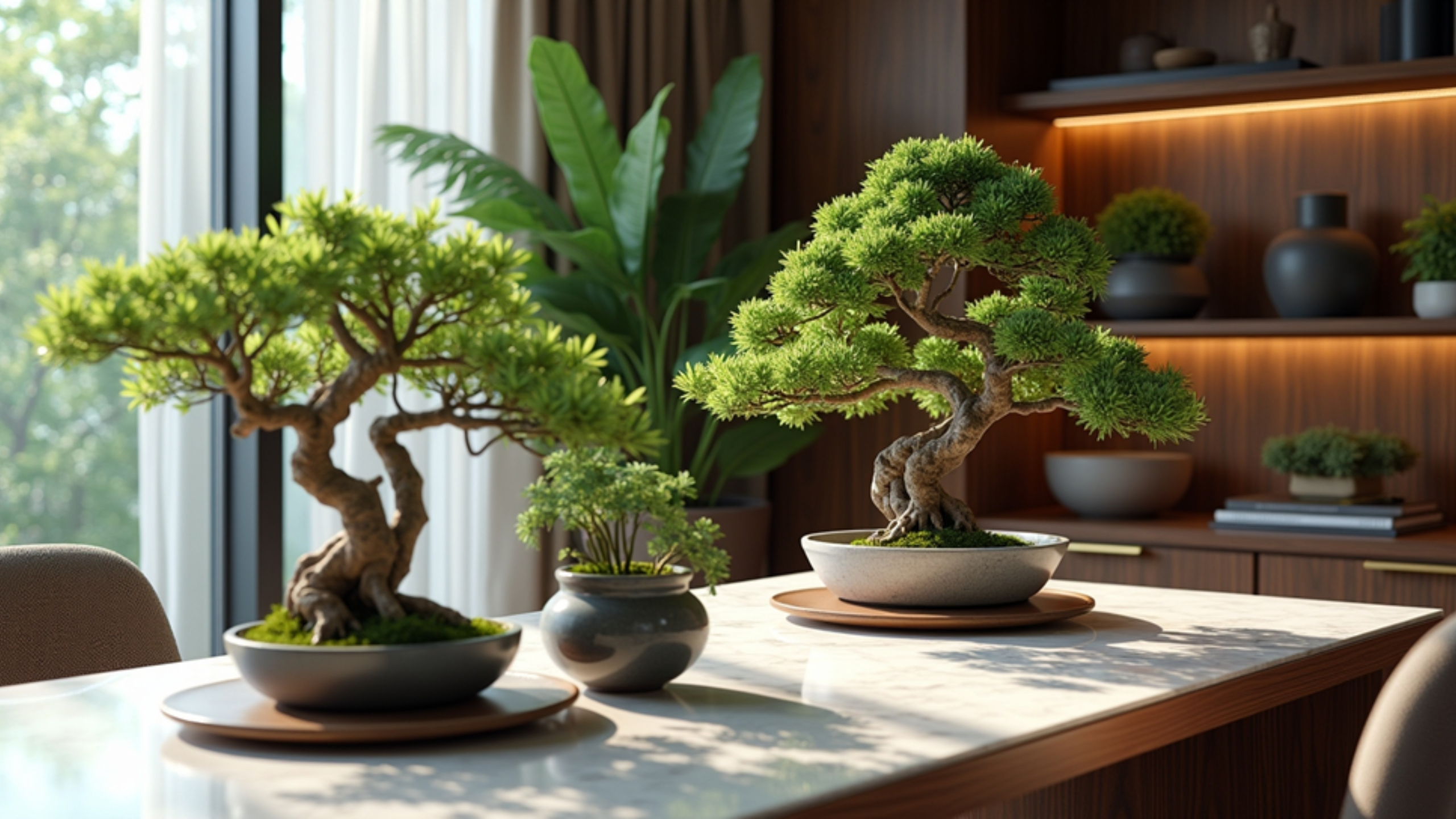
Bringing a touch of nature indoors can significantly boost your home office’s atmosphere. Many remote workers find that a bit of greenery helps them feel calmer and more focused. This guide explores ten beautiful indoor bonsai tree ideas. These living sculptures can make your workspace both more productive and visually appealing. Let’s discover how these miniature trees can enhance your work-from-home experience.
Why Add an Indoor Bonsai Tree to Your Home Office?
Adding a bonsai tree to your office can dramatically improve your workspace. These small trees are known for their calming effect. They can reduce stress and increase feelings of peace. Studies show that plants in the workplace can boost productivity and creativity. They also improve air quality, which is crucial for long work hours.
A bonsai tree is more than just a decoration. It’s a living piece of art that brings a sense of tranquility. Its presence can transform a sterile office into a more inviting and inspiring environment. This makes it easier to stay focused and motivated throughout your workday.
Top 10 Indoor Bonsai Tree Ideas for Your Workspace
Here are ten fantastic indoor bonsai tree ideas that will add beauty and calm to your home office. We’ve chosen trees that are relatively easy to care for and look stunning. Each offers a unique aesthetic to complement different office styles.
1. Ficus Retusa (Chinese Banyan)
The Ficus Retusa, also known as the Chinese Banyan, is a popular choice for beginners. It features aerial roots that grow downwards, creating a unique, layered look. This tree thrives in bright, indirect light and tolerates occasional watering inconsistencies. Its lush green leaves add a vibrant touch to any desk.
This hardy bonsai is forgiving for new caretakers. It can withstand a range of indoor conditions, making it ideal for busy professionals. Its attractive aerial roots add a distinctive charm that sparks conversation.
2. Jade Tree (Crassula ovata)
The Jade Tree is a succulent bonsai, making it incredibly drought-tolerant. It has thick, fleshy leaves and sturdy branches that resemble a miniature tree. This plant prefers bright sunlight and infrequent watering. It’s a great option if you sometimes forget to water your plants.
Its compact size and easy-care nature make it perfect for smaller desks. The Jade tree symbolizes good luck and prosperity, a nice sentiment for a workspace. Its sculptural form adds a modern, minimalist appeal.
3. Chinese Elm (Ulmus parvifolia)
The Chinese Elm is another excellent beginner bonsai. It has small, serrated leaves and a graceful, spreading canopy. This tree can tolerate a variety of light conditions, though it prefers bright, indirect light. It requires regular watering but also benefits from occasional drying out of the soil.
Its naturalistic style and fast growth make it rewarding to care for. You can easily shape its branches to create a desired aesthetic. The Chinese Elm brings a sense of established elegance to your office.
4. Dwarf Schefflera (Schefflera arboricola)
Dwarf Schefflera is a tropical bonsai known for its glossy, finger-like leaves. It’s quite resilient and can tolerate lower light levels better than many other bonsai. This makes it suitable for offices that don’t get a lot of natural sunlight. Water when the top inch of soil feels dry.
This tree’s vibrant foliage adds a splash of tropical greenery. It’s a good choice for adding a lively feel to your workspace. The Schefflera is also known for its air-purifying qualities.
5. Fukien Tea (Carmona retusa)
The Fukien Tea tree is cherished for its small white flowers that bloom year-round. It also produces tiny red berries. This tree needs consistent moisture and bright light to thrive. It can be a bit more sensitive than other options, but its blooms are worth the effort.
Its delicate flowers and berries offer a charming visual display. This bonsai adds a touch of gentle beauty to your desk. The Fukien Tea tree brings a constant sense of renewal to your office.
6. Serissa (Serissa foetida)
The Serissa, also called the “Snow Rose,” produces delicate, star-shaped white flowers. It prefers bright, indirect light and consistently moist soil. This bonsai can be a bit finicky and might drop leaves if stressed by changes in temperature or watering. However, it typically recovers well.
Its prolific blooming makes it a delightful addition to any workspace. The Serissa offers a sweet fragrance when in bloom. It brings a sense of delicate joy to your daily work.
7. Hawaiian Umbrella Tree (Schefflera actinophylla)
Similar to the Dwarf Schefflera, the Hawaiian Umbrella Tree has larger, umbrella-shaped leaves. It’s a robust and forgiving plant that tolerates a range of conditions. It prefers bright light but can adapt to lower light environments. Regular watering is key, allowing the soil to dry slightly between waterings.
Its large, glossy leaves create a bold tropical statement. This tree brings a sense of lushness and vitality to your office. The Hawaiian Umbrella Tree enhances your workspace with its vibrant, natural form.
8. Weeping Fig (Ficus benjamina)
The Weeping Fig is a classic indoor tree that can be trained into a bonsai. It has elegant, drooping branches with small, pointed leaves. This tree enjoys bright, indirect light and consistent watering. Avoid moving it frequently, as it can react by dropping leaves.
Its graceful, cascading branches create a sophisticated look. The Weeping Fig adds a touch of timeless elegance to your office. It brings a sense of calm and natural flow to your desk.
9. Bougainvillea (Bonsai Variety)
While often grown outdoors, certain bougainvillea varieties can be cultivated as indoor bonsai. They are known for their vibrant, colorful bracts (often mistaken for flowers). Bougainvillea needs plenty of direct sunlight and well-draining soil. They require careful watering, allowing the soil to dry out between waterings.
These bonsai offer a spectacular display of color. They can energize your workspace with their vivid hues. A bougainvillea bonsai is a stunning focal point for any office.
10. Juniper (Juniperus procumbens ‘Nana’)
The Juniper is a classic choice for bonsai, known for its rugged, natural appearance. It has fine, needle-like foliage and a strong, woody trunk. This tree requires a sunny location and well-draining soil. It needs consistent watering, especially during warmer months.
Its classic bonsai look evokes a sense of ancient strength. The Juniper brings a grounding, stable presence to your office. It’s a symbol of resilience and endurance.
Caring for Your Indoor Bonsai Tree
Caring for your indoor bonsai tree is essential for its health and longevity. While each species has unique needs, some general guidelines apply. Proper care ensures your tree remains a beautiful addition to your office.
Watering Your Bonsai
Watering is perhaps the most critical aspect of bonsai care. The soil should be kept consistently moist but not waterlogged. Check the soil moisture by touching the surface; if it feels dry, it’s time to water. Use a watering can with a fine rose to avoid disturbing the soil.
Overwatering can lead to root rot, while underwatering can cause the leaves to wilt and fall. It’s better to water thoroughly when needed than to sprinkle water daily. Ensure your pot has good drainage holes.
Light Requirements
Most indoor bonsai trees need plenty of bright, indirect light. Place your bonsai near a window where it can receive ample sunlight without being scorched. South-facing windows are often ideal, but observe your tree’s reaction. If leaves turn yellow or develop brown spots, it might be getting too much direct sun.
If natural light is insufficient, consider using a grow light. These lights mimic natural sunlight and can supplement your bonsai’s needs. Proper lighting is crucial for photosynthesis and overall plant health.
Soil and Fertilizing
Bonsai soil is specially formulated to provide excellent drainage and aeration. It typically consists of a mix of akadama, pumice, and lava rock. This allows water to drain freely, preventing root rot.
Fertilizing is necessary to replenish nutrients in the limited soil volume. Use a balanced bonsai fertilizer during the growing season (spring and summer). Follow the fertilizer’s instructions carefully, as over-fertilizing can harm the tree.
Pruning and Shaping
Pruning is key to maintaining the miniature size and desired shape of a bonsai. It involves trimming branches and roots. Use sharp bonsai tools for clean cuts to promote healing. Regular pruning encourages denser foliage and a more refined appearance.
Shaping can be achieved through wiring branches. This technique involves carefully wrapping wire around branches to guide their growth. Remove the wire before it cuts into the bark.
How Bonsai Trees Enhance Home Office Productivity and Well-being
The presence of a bonsai tree in your home office can have profound effects. It’s not just about aesthetics; it’s about creating an environment that supports focus and reduces stress. The connection between nature and mental well-being is well-documented.
Stress Reduction and Improved Mood
Studies have shown that interacting with plants can lower stress levels and improve mood. The calming visual appeal of a bonsai tree, with its natural forms and textures, can be very soothing. This is especially beneficial during demanding work tasks.
A report from the University of Exeter found that even a small amount of indoor greenery can significantly boost well-being. Having a living, growing thing on your desk can foster a sense of peace.
Enhanced Focus and Creativity
The gentle presence of a bonsai can help clear the mind and improve concentration. By reducing visual clutter and bringing a sense of order, it allows for better focus on work. Some research suggests that natural elements can stimulate creativity.
Having a bonsai nearby can provide a mental break without leaving your desk. Looking at the tree for a moment can refresh your mind, leading to new ideas and solutions.
Air Quality Improvement
While bonsai trees are small, they do contribute to improving indoor air quality. Plants absorb carbon dioxide and release oxygen. They can also help filter out certain airborne toxins. A healthier environment means a healthier and more productive you.
A study published in the Journal of Environmental Science and Health highlighted the air-purifying capabilities of common indoor plants. This benefit is a welcome addition to any home office setup.
A Symbol of Patience and Discipline
Caring for a bonsai tree requires patience and consistent effort. This process can be a valuable metaphor for work and life. The dedication involved in nurturing a bonsai can foster a sense of discipline and mindfulness.
The slow growth and meticulous care required for bonsai can be a grounding practice. It reminds you of the value of persistence and attention to detail. These are qualities that translate directly into improved work habits.
Choosing the Right Indoor Bonsai for Your Workspace
Selecting the ideal indoor bonsai tree involves considering your office environment and your personal caregiving style. Think about the available light, your time commitment, and the aesthetic you desire.
Assessing Your Office Environment
Evaluate the amount of natural light your office receives. If it’s bright and sunny, you have more options. For shadier spots, choose a more tolerant species like the Dwarf Schefflera. Consider the temperature and humidity levels as well.
Think about the size of your desk and the overall office layout. A large, sprawling bonsai might overwhelm a small desk, while a compact one might get lost in a large space.
Matching Bonsai to Your Lifestyle
Be honest about how much time you can dedicate to plant care. If you’re often busy or travel frequently, opt for low-maintenance trees like the Jade Tree or Ficus Retusa. If you enjoy the ritual of plant care, a more demanding species like the Fukien Tea or Bougainvillea might be rewarding.
Your personal preference for aesthetics also plays a role. Do you prefer lush foliage, delicate flowers, or a rugged, ancient look? Choose a tree that resonates with you.
Frequently Asked Questions About Indoor Bonsai Trees
Can any tree be turned into a bonsai?
While many tree species can be trained as bonsai, some are much better suited for indoor conditions and beginner care. Trees with small leaves, flexible branches, and a natural miniature appearance tend to work best.
How often should I water my indoor bonsai?
Watering frequency depends on the tree species, pot size, soil type, and environmental conditions. Generally, water when the top inch of soil feels dry to the touch. It’s better to check daily.
Do indoor bonsai trees need direct sunlight?
Most indoor bonsai require bright, indirect light. Some species, like Juniper or Bougainvillea, benefit from some direct sunlight, but care must be taken to avoid scorching the leaves.
How long do indoor bonsai trees live?
With proper care, indoor bonsai trees can live for many years, often decades, and even centuries in some cases. Their lifespan depends on the species and the quality of care provided.
What are the benefits of having a bonsai in my home office?
Bonsai trees offer numerous benefits, including stress reduction, improved mood, enhanced focus, increased creativity, better air quality, and they serve as living art that can inspire patience and discipline.
Are indoor bonsai trees difficult to care for?
Some indoor bonsai can be challenging, but many species are quite forgiving for beginners. Choosing a hardy species and understanding its basic needs will make care much easier.
Conclusion: Cultivate Calm and Productivity with a Bonsai
Adding an indoor bonsai tree to your home office is a beautiful way to blend nature with your workspace. These ten stunning indoor bonsai tree ideas offer something for everyone, from beginner-friendly Ficus and Jade trees to the more vibrant Bougainvillea. They not only enhance your office’s aesthetic but also promote well-being, reduce stress, and can even boost your productivity.
Choosing the right bonsai and providing consistent care will ensure it thrives. This living artwork will bring tranquility and a sense of accomplishment to your daily work routine. Start your bonsai journey today and transform your home office into a more serene and inspiring environment.
Looking for more ways to optimize your workspace? Follow Toolguider.com for more expert tips on home office setups and productivity tools.
Author's Bio: Sujain Thomas

Sujain Thomas is a freelance content writer and blogger who has written articles for several renowned blogs and websites about Home decor/Diy and various topics to engineer more traffic on websites.She love to decorate home in her free time