

This article is part of the HOGDigest editorial series. → Explore HOGDigest
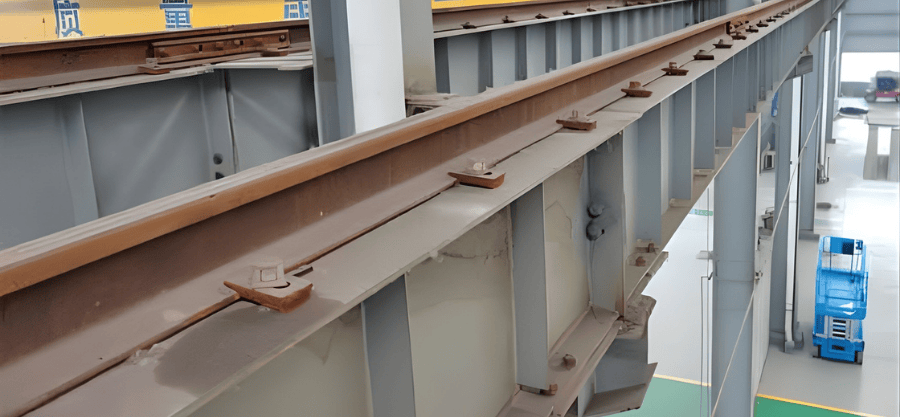
The seamless operation of a heavy-duty crane relies on the integrity of its runway. While mechanical joints have their place, the gold standard for creating a continuous, smooth, and durable path is welding. The process of joining two massive sections of high-carbon steel rail is far more than simple metalwork; it's a science. Mastering heavy-duty crane rail welding techniques is essential for ensuring the longevity, safety, and efficiency of any industrial crane system.
This guide Xingrail track provides a deep dive into the critical world of crane rail welding. We will explore advanced welding methods for crane rail joints, the vital role of thermal stress management in crane rail welding, and the precision required for alignment. Furthermore, we'll examine the rise of robotic welding systems for heavy-duty crane rails and the non-negotiable inspection processes that follow every weld. By understanding these elements, you can ensure your project meets the highest standards of quality and safety.
Why Weld Crane Rails? The Quest for a Perfect Joint
Heavy-duty cranes, especially those in ports, steel mills, and automated warehouses, exert tremendous dynamic forces on their tracks. Every time a crane wheel passes over a traditional mechanical joint, it creates an impact. Over thousands of cycles, this repeated impact leads to significant wear and tear on both the crane wheels and the rail ends. Consequently, this results in increased maintenance costs, operational noise, and potential safety hazards.
Welding eliminates the joint, creating a single, continuous piece of steel. This offers several key advantages:
-
Reduced Wear and Tear: A seamless surface dramatically reduces impact loads, extending the life of both the wheels and the rails.
-
Smoother Operation: Eliminating joints ensures a smoother, quieter crane operation, which is particularly important for high-speed or automated systems.
-
Increased Safety: It removes the risk of joint failure, a potential cause of catastrophic crane derailments.
-
Lower Maintenance: Welded joints, when done correctly, require significantly less maintenance than bolted mechanical joints.
Given these benefits, welding has become the preferred method for joining rails in most modern, high-demand crane applications.
Advanced Welding Methods for Crane Rail Joints
Several specialized techniques are used for welding crane rails. The choice of method depends on the specific rail profile, the project requirements, and whether the work is being done in a workshop or on-site.
Aluminothermic Welding (Thermite)
Aluminothermic welding is one of the most common on-site welding solutions for crane rail systems. This process involves using the chemical reaction of aluminum powder and iron oxide to create molten steel at extremely high temperatures.
Here is a simplified breakdown of the process:
-
Preparation: The rail ends are cut and precisely aligned with a specific gap between them.
-
Molding: A refractory mold, designed for the specific rail profile, is clamped around the gap.
-
Preheating: The rail ends are preheated, typically with propane-oxygen torches, to a specific temperature. This step is crucial for ensuring a proper metallurgical bond and is a key part of the heat treatment processes for crane rail welding.
-
Reaction: The thermite mixture in a crucible is ignited. The exothermic reaction produces molten steel, which is then tapped into the mold, filling the gap.
-
Cooling and Finishing: After a controlled cooling period, the mold is removed, and the excess metal is sheared off. The weld is then precisely ground to match the rail profile.
Aluminothermic welding is highly portable, making it ideal for on-site work, but it requires certified technicians and strict adherence to procedures.
Enclosed Arc Welding (Metal Arc)
Another widely used method is enclosed arc welding. This technique uses a copper mold to contain the molten metal from a continuous-feed arc welding process. It offers excellent control and produces high-quality welds. This method is often favored for its consistency and the ability to use specialized wear-resistant welding materials for crane rails, tailored to match or even exceed the properties of the parent rail.
The Critical Role of Heat and Stress Management
Welding is a process of intense, localized heat. Managing this heat and the stresses it creates is arguably the most challenging aspect of crane rail welding.
Heat Treatment Processes for Crane Rail Welding
Heat treatment processes for crane rail welding are not optional; they are integral to creating a sound weld.
-
Preheating: Before welding, the rail ends are heated to a specific temperature. Preheating slows the cooling rate of the weld area, which prevents the formation of brittle microstructures like martensite. This is vital for avoiding cracks and ensuring the weld is ductile enough to handle operational stresses.
-
Post-Weld Heat Treatment (PWHT): In some cases, particularly with very high-strength rails, a controlled heating and cooling cycle is applied after welding. PWHT relieves residual stresses locked into the weld and further tempers the microstructure, improving its toughness and resistance to fracture.
Thermal Stress Management in Crane Rail Welding
As the weld cools and contracts, it pulls on the adjacent rail, creating immense tensile stress. If not managed, this thermal stress management in crane rail welding failure can lead to rail buckling or weld failure.
Several strategies are used to manage this stress:
-
Rail Pulling/Stressing: Before the final weld in a long string of rails, the rails are often pulled into tension using hydraulic tensors. This pre-tensions the rail so that when the weld cools and shrinks, the rail returns to a neutral or slightly compressive state at a specific "stress-free" temperature.
-
Controlled Cooling: The cooling rate of the weld is carefully controlled, often using insulated blankets, to minimize the formation of residual stresses and prevent thermal shock.
The Rise of Robotic Welding Systems
To improve consistency, speed, and safety, robotic welding systems for heavy-duty crane rails are becoming more common, especially in workshop settings. A robot can perform a weld with a level of precision and repeatability that is difficult for a human to match.
Advantages of robotic welding include:
-
Unmatched Consistency: The robot executes the same programmed weld path, speed, and parameters every time, leading to highly uniform welds.
-
Enhanced Quality: Automated systems can precisely control all welding variables, reducing the chance of human error.
-
Increased Productivity: Robots can work faster and without fatigue, significantly increasing throughput for large projects.
-
Improved Safety: It removes the human operator from the immediate vicinity of high heat, fumes, and intense UV radiation.
While the initial investment is high, the long-term benefits in quality and productivity are making robotic systems an attractive option for major crane rail projects.
Verification and Quality Control
A weld is not complete until it has been thoroughly inspected and proven to be free of defects. This verification process involves both visual inspection and advanced technical methods.
Precision Alignment During Crane Rail Welding
First thing to remember, quality starts before the arc is ever struck. Precision alignment during crane rail welding is fundamental. If the rails are not perfectly aligned—horizontally and vertically—before welding, the finished track will have a built-in defect that no amount of grinding can fully correct. Laser alignment tools and precision gauges are used to ensure the rails are positioned within extremely tight tolerances prior to being fixed in place for welding.
Non-Destructive Testing (NDT) for Welded Crane Rails
Once the weld is complete and has cooled, it must be inspected for internal and surface-level flaws. Non-destructive testing (NDT) for welded crane rails is a suite of techniques used to find these defects without damaging the weld itself.
Common NDT methods include:
-
Visual Testing (VT): A trained inspector visually examines the weld for surface irregularities, cracks, or an incorrect profile.
-
Magnetic Particle Testing (MT): This method is used to detect surface and near-surface cracks. The area is magnetized, and iron particles are applied. Any cracks will disrupt the magnetic field, causing the particles to gather and reveal the flaw.
-
Ultrasonic Testing (UT): This is the most common method for finding internal defects. A probe sends high-frequency sound waves into the weld. By analyzing the returning echoes, an inspector can identify internal flaws like porosity, lack of fusion, or cracks.
Post-Weld Inspection Techniques for Crane Rails
Beyond standard NDT, other post-weld inspection techniques for crane rails focus on the geometry and hardness of the finished weld.
-
Profile Grinding and Measurement: The weld must be ground perfectly smooth to match the rail profile. A straightedge and feeler gauges are used to ensure there are no high or low spots.
-
Hardness Testing: Portable hardness testers are used to check the hardness of the weld and the heat-affected zone (HAZ). The hardness must fall within a specified range to ensure it is not too brittle or too soft.
Ensuring Compliance and On-Site Execution
All welding activities must adhere to strict industry codes. Welding standards compliance for crane rail projects is mandatory. These standards, such as those from the American Welding Society (AWS) or European norms (EN), dictate every aspect of the process, including welder qualification, procedure specifications, and inspection criteria.
Effective on-site welding solutions for crane rail systems depend on having a team that is not only certified but also deeply experienced. They must be able to adapt to site conditions while rigorously following the approved welding procedure specification (WPS). This includes managing environmental factors like wind and moisture, which can adversely affect weld quality.
In conclusion, the techniques for heavy-duty crane rail welding are a far cry from ordinary fabrication. It is a highly engineered process where metallurgy, precision mechanics, and rigorous quality control converge. From managing the intense heat and stress to employing advanced non-destructive testing, every step is critical. By prioritizing precision alignment, adhering to strict standards, and leveraging both advanced methods and expert technicians, you can create a seamless, safe, and durable crane rail system built to withstand decades of demanding service.