

This article is part of the HOGDigest editorial series. → Explore HOGDigest
Generators are among the most valuable investments a homeowner or business owner can make. When the power goes out — whether due to a hurricane, a winter storm, or an aging electrical grid — a well-maintained generator is the difference between comfort and chaos. Yet despite their importance, generators are frequently neglected until the moment they are needed most. A proactive maintenance routine keeps your unit reliable, extends its lifespan, and ensures it performs when it counts.
Why Regular Maintenance Matters More Than You Think
Generators are not set-and-forget appliances. Like any engine-driven machine, they accumulate wear, consume fluids, and degrade over time — especially when sitting idle for long stretches. According to the Electrical Generating Systems Association, a properly maintained standby generator can last 20 to 30 years, while a neglected one may fail well before the decade mark. The irony is that most generator failures occur not from overuse, but from underuse combined with poor upkeep. Fuel degrades, batteries discharge, and seals dry out when a unit sits untouched for months.
Beyond longevity, there is a safety dimension. A poorly maintained generator can produce dangerous carbon monoxide levels, develop fuel leaks, or experience electrical faults that put people and property at risk. Regular inspections catch these problems early, long before they become emergencies.
When to Call a Professional
While many aspects of generator maintenance are manageable for a diligent homeowner, certain tasks require professional expertise. Annual inspections by a certified technician should include a thorough check of the transfer switch, control board, voltage output, and exhaust system. For instance, Fort Lauderdale generator services are commonly sought before hurricane season peaks, when the stakes of a generator failure are at their highest. Professionals can also perform firmware updates on digital control panels and verify that automatic transfer switches are functioning correctly.
Run Your Generator on a Schedule
One of the simplest and most effective maintenance habits is running your generator regularly, even when you do not need it. Most manufacturers recommend running a standby generator under load for at least 30 minutes every month. This exercise cycle circulates oil, recharges the battery, burns off moisture that accumulates in the fuel system, and keeps internal components lubricated. Skipping these monthly runs is one of the most common mistakes generator owners make, and it is a primary cause of startup failures during actual outages.
If your generator has an automatic exercise feature, program it to run during daylight hours so you can observe it in operation and listen for anything unusual.
Oil and Filter Changes Are Non-Negotiable
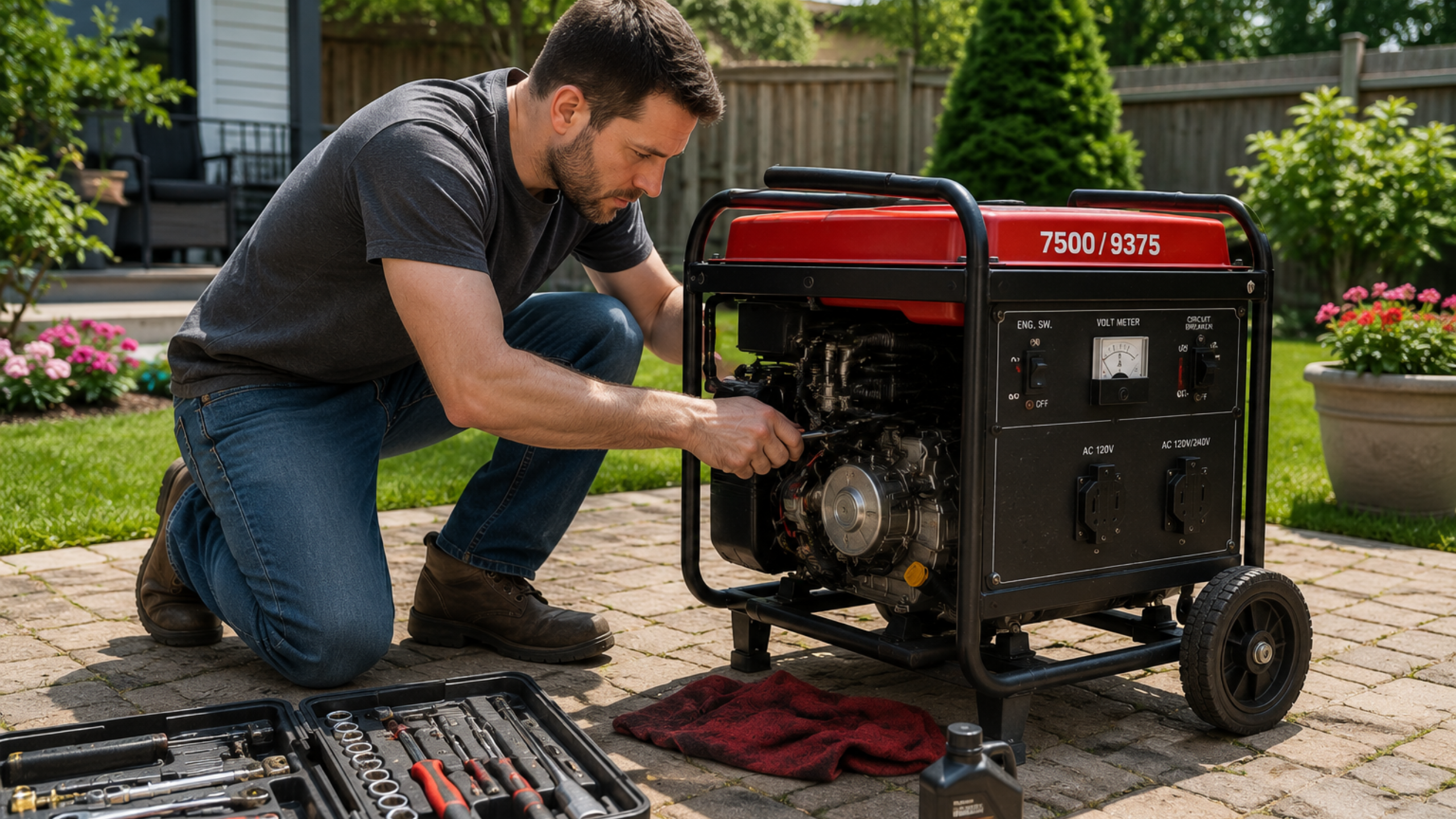
Engine oil is the lifeblood of your generator. Over time, oil breaks down and accumulates contaminants that accelerate engine wear. For most residential standby generators, manufacturers recommend an oil change every 100 to 200 hours of operation, or at least once a year — whichever comes first. If your generator ran heavily during a prolonged outage, check the oil immediately afterward rather than waiting for the scheduled interval.
Always replace the oil filter at the same time as the oil, and use the viscosity grade specified in your owner's manual. Using the wrong oil type can void warranties and reduce efficiency. Air filters should also be inspected regularly and replaced when they show signs of dirt accumulation or damage, as a clogged filter forces the engine to work harder and consume more fuel.
Fuel Quality and Storage
Gasoline has a shelf life of roughly three to six months without a stabilizer additive, while diesel can last six to twelve months under proper conditions. Degraded fuel is one of the leading causes of generator failure. If your unit runs on gasoline, always add a fuel stabilizer when storing it for more than 30 days, and drain the carburetor if the generator will sit unused for an extended period.
For propane and natural gas generators, fuel storage is less of a concern, but you should still inspect fuel lines, connections, and regulators for leaks or corrosion on a seasonal basis. A simple soap-and-water solution brushed over connections will bubble up at any leak point.
Battery Maintenance and Load Testing
Standby generators rely on a battery to start automatically during an outage. A dead or weak battery is one of the top reasons a generator fails to respond when called upon. Inspect battery terminals regularly for corrosion, and keep them clean with a wire brush and a baking soda solution. Most generator batteries should be replaced every two to three years, even if they appear functional, because battery capacity diminishes with age in ways that are not always visible.
Load testing — running the generator under a simulated or real electrical demand — is also important to verify that it can handle your home or facility's power requirements. Some homeowners skip this step, only to discover during an outage that their generator trips or underperforms under full load.
Build a Maintenance Log
Keeping a written or digital record of every service performed on your generator — oil changes, filter replacements, battery checks, professional inspections — gives you a clear picture of the unit's health over time. It also simplifies warranty claims and increases resale value if you ever choose to upgrade. A few minutes of record-keeping after each maintenance session can save considerable time and money down the road.
Conclusion
Don't wait until the next power outage to discover your generator isn't ready. Schedule routine maintenance, keep detailed service records, and partner with a trusted generator service professional to ensure your system remains in peak operating condition year-round. Taking proactive steps today will give you peace of mind and reliable backup power when you need it most.
A generator is only as dependable as the maintenance it receives. By following a consistent maintenance schedule, monitoring fuel and battery health, changing oil and filters on time, and arranging professional inspections when needed, you can significantly reduce the risk of unexpected failures. Whether your generator serves as emergency backup for your home or powers critical business operations, investing a little time in routine upkeep ensures it will be ready to perform whenever the lights go out. Preventive maintenance also helps maximize fuel efficiency, lower repair costs, and extend the overall lifespan of your equipment. With the right care, your generator can provide dependable performance for many years to come.