

This article is part of the HOGDigest editorial series. → Explore HOGDigest
If you want to run a food business from your Atlanta home, start by determining whether your menu can operate under Georgia's cottage food rules or whether you need a permitted or licensed commercial kitchen.
A home-based commercial kitchen can work for certain bakers, caterers, meal-prep businesses, and other food entrepreneurs. However, requirements can vary based on the food you prepare, your production methods, your property, and your local jurisdiction.
Key Takeaways
- Certain low-risk foods may qualify under Georgia's cottage food rules.
- Other food businesses may require a permitted or licensed facility.
- Local requirements can vary, so check with the appropriate authority before construction.
- Plan plumbing, electrical, ventilation, refrigeration, and equipment before choosing finishes.
- Size equipment around your busiest realistic production period.
- Review insurance coverage before accepting commercial orders.
1. Determine What Type of Kitchen You Need
Georgia's cottage food rules cover certain low-risk foods, including some baked goods, jams, dry mixes, and candies that do not require refrigeration for food safety.
Prepared meals, certain cream-based desserts, fresh pasta, sauces, and other foods may fall outside those rules and require a permitted food establishment or licensed commercial kitchen.
Before planning the space, identify exactly what you will produce and how you will prepare and store it. Then confirm which requirements apply.
2. Check Local Atlanta-Area Requirements
Metro Atlanta does not have one universal process for every food facility. Fulton, DeKalb, Cobb, and Gwinnett counties can have different procedures or interpretations.
Before construction, ask the appropriate local authority about:
- Whether your operation requires a permitted or licensed facility
- Sink and handwashing requirements
- Plumbing and drainage
- Ventilation
- Equipment standards
- Inspection procedures
- Zoning and building requirements
Resolving these questions before construction can prevent costly changes later.
3. Design Around Your Production Process
A micro commercial kitchen should be designed around how the business will operate. Read more about acoustic design.
Plan where ingredients will be stored, food prepared, dishes cleaned, and finished products stored. In a small kitchen, equipment placement is particularly important because inefficient movement can quickly become a problem.
Think about the workflow before selecting cabinets, countertops, or appliances.
Good kitchen design also considers how the space will function day-to-day, from layout and storage to the placement of appliances and work surfaces. For more ideas on creating a functional space, explore our guide to thoughtful kitchen remodeling.
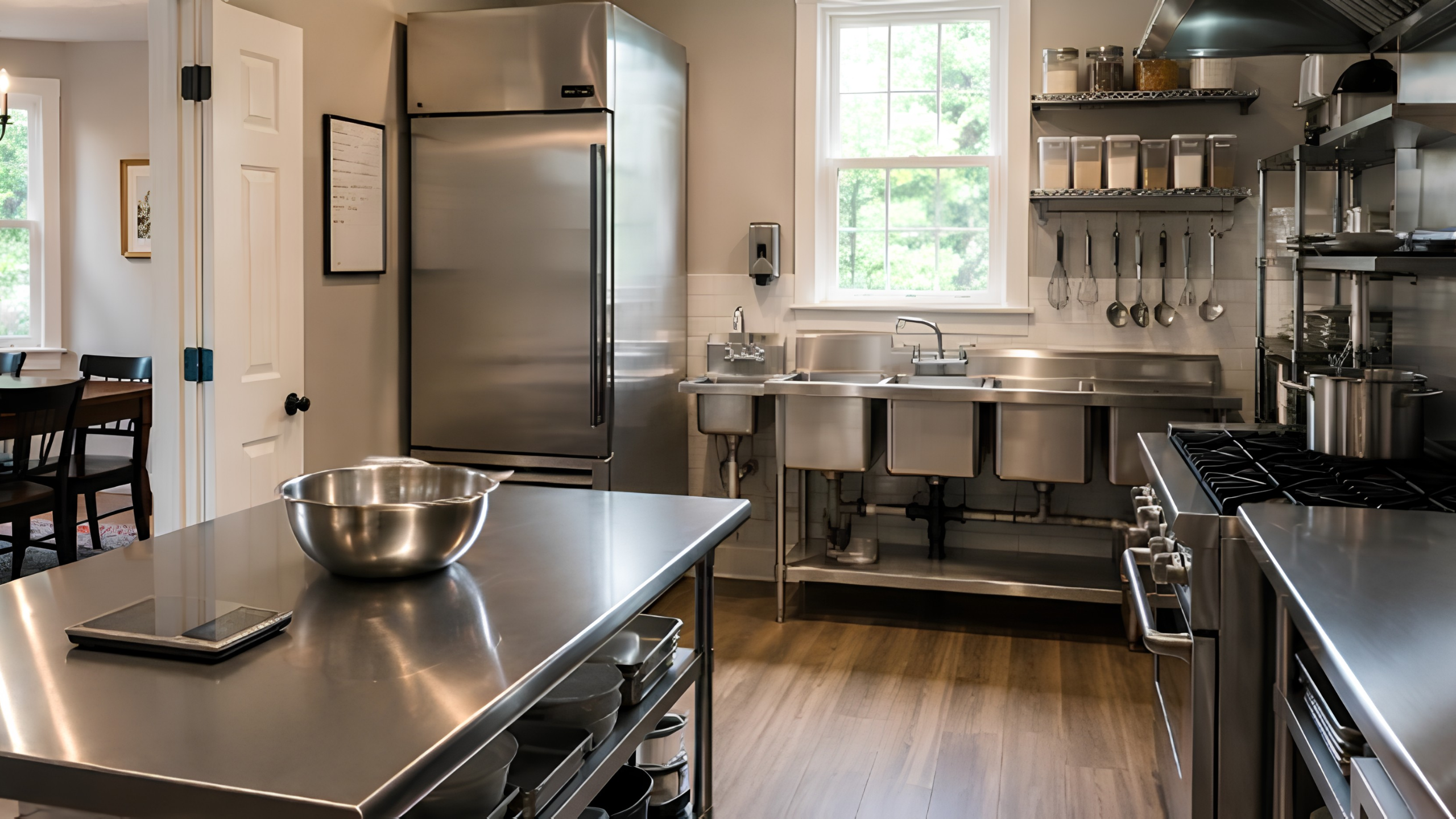
Alt text: Compact commercial kitchen with a three-compartment sink, handwashing sink, commercial refrigerator, stainless-steel prep surfaces, and ventilation system.
4. Plan Plumbing, Refrigeration, and Ventilation
A three-compartment sink may be required for washing, rinsing, and sanitizing, while a dedicated handwashing sink may also be necessary. Confirm the exact requirements for your operation before construction.
Refrigeration should be sized according to production volume rather than room size. Commercial food production can place greater demands on refrigeration due to frequent door openings, larger loads, and repeated temperature recovery. If your operation relies on a walk-in cooler, planning for regular maintenance and prompt repairs is important as well. Businesses that need walk-in cooler repair in Atlanta should have a reliable service provider on hand before equipment failure disrupts production.
Ventilation requirements depend on the cooking equipment and operation. A small room does not automatically mean a residential exhaust system will be sufficient. Address ventilation before construction begins.
5. Budget for Infrastructure
Cabinets and countertops are only part of the cost. A commercial kitchen may also require:
- Electrical panel upgrades and new circuits
- Plumbing modifications
- Drainage
- Ventilation
- HVAC work
- Commercial refrigeration
- Equipment installation
- Permitting and inspection-related work
The original project guidance recommends a 15% to 20% contingency for substantial renovation because hidden conditions can increase costs once work begins.
6. Consider Atlanta's Climate
Atlanta's warm, humid climate can affect a compact commercial kitchen. Refrigeration and cooling equipment may work harder during warmer months, while heat and condensation can become more noticeable in poorly managed spaces.
Plan ventilation, cooling, equipment placement, and clearances as part of the original design.
Common Mistakes to Avoid
Undersizing refrigeration: Plan for your busiest realistic production period rather than an average week.
Skipping the pre-construction health department conversation: Find out about required sinks, drains, equipment, and other features before closing walls.
Treating ventilation as optional: Requirements depend on the cooking equipment and operation, not simply the room's size.
Assuming homeowners insurance covers the business: A standard policy may not cover commercial food production. Discuss the business with your insurance professional before accepting orders.
Planning only for construction: Refrigeration, plumbing, exhaust equipment, and other systems will require maintenance and eventual repairs.
Planning for maintenance also means knowing who to call when an appliance or refrigeration system fails. Having a reliable local repair company such as Appliance EMT on hand can help minimize downtime when essential kitchen equipment needs attention.
Can You Use a Garage or Basement?
Possibly, but the space must meet the requirements that apply to the proposed food operation. Health, building, plumbing, electrical, and zoning requirements may all affect whether a garage or basement can be converted into a food-production space.
Having enough room for appliances does not automatically make a space suitable for commercial food production.
Frequently Asked Questions
Do I need a permit to sell food from home in Atlanta?
It depends on the food and how the business operates. Certain low-risk foods may qualify under Georgia's cottage food rules, while other operations may require a permitted or licensed facility.
What size refrigerator do I need?
Choose refrigeration based on production volume rather than room size. Plan for your busiest realistic week.
Can I use a residential refrigerator?
That depends on the operation and local requirements. Commercial-rated refrigeration may be appropriate for licensed food-production settings, but equipment requirements should be confirmed before purchase.
Can I build a commercial kitchen in my garage or basement?
Potentially. The space must comply with the requirements applicable to the intended food operation, including health, building, plumbing, electrical, and zoning requirements.
Before You Start Building
Building a micro commercial kitchen at home involves more than fitting commercial appliances into a small room. Start with your menu and production process, determine which rules apply, and then plan the plumbing, electrical, ventilation, refrigeration, and equipment around the business.
If your operation qualifies under Georgia's cottage food framework, you may not need a commercial build-out. If you need a permitted or licensed kitchen, addressing requirements before construction can help prevent expensive changes later.