

This article is part of the HOGDigest editorial series. → Explore HOGDigest
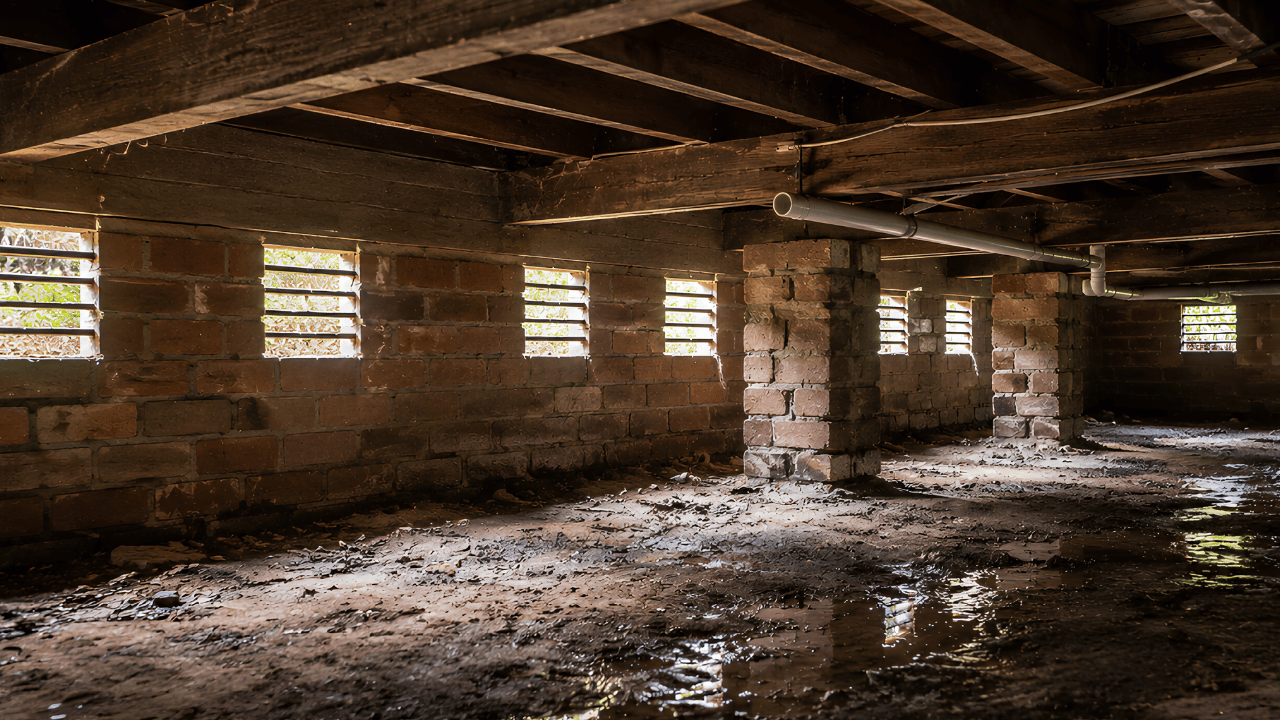
If you have ever looked beneath your home and noticed small vents built into the brickwork, you have already seen passive subfloor ventilation in action. It is one of the oldest and most common methods used to improve airflow beneath a house, and for many Sydney homes, it has worked effectively for decades. But Sydney’s conditions can make subfloor ventilation more challenging. Regular rainfall, moisture-retaining clay soils, and tightly packed residential blocks can all contribute to damp conditions beneath a property.
This leaves many homeowners wondering whether passive ventilation is actually doing enough, or simply creating a false sense of security.
What Is Passive Ventilation?
Passive ventilation relies on natural airflow to move air through the subfloor space. There is no fan, no motor, and no power involved. Air simply moves in through vents on one side of the house and out through vents on the other, driven by wind pressure and small temperature differences between the inside and outside air. In theory, this constant air exchange should be enough to stop moisture from building up under a home. Damp air gets replaced with fresh, drier air, and the subfloor stays reasonably dry over time.
This system was the standard for most Australian homes built before ventilation fans became common, and it still works reasonably well in the right conditions.
When Passive Ventilation Works Well
Passive ventilation tends to perform best when a few things line up:
- The block has good airflow around it, without fences, extensions, or neighbouring buildings blocking wind movement
- The vents are correctly sized, evenly spaced, and unobstructed
- The site drains well, so water is not pooling near the subfloor to begin with
- The home is on elevated or sloped ground rather than a low-lying block
In these situations, a passive system can genuinely keep a subfloor dry without any extra equipment. It is low-cost, requires no power, and needs very little maintenance beyond keeping the vents clear.
Why Sydney Conditions Make Passive Ventilation Harder
This is where things get tricky for a lot of local homeowners. Sydney's climate and geography do not always play nicely with a system that depends entirely on natural airflow.
Heavy and Frequent Rainfall
Sydney gets substantial rainfall across the year, and during wetter months, the ground around a home can stay saturated for extended periods. Passive ventilation can remove moisture from the air, but it cannot keep up when the soil itself is holding onto that much water.
Clay-Heavy Soils
Many Sydney suburbs sit on clay based soil, which absorbs water and releases it slowly. Even after the rain stops, that moisture keeps evaporating upward into the subfloor for days or weeks. A passive system relying on the odd breeze is often no match for that steady, ongoing moisture load.
Densely Packed Housing Blocks
As Sydney has grown, blocks have become smaller, and homes have been built closer together. Fences, side extensions, garages, and neighbouring walls all reduce the natural airflow that passive ventilation depends on. Less wind movement around the house means less air actually makes it through the subfloor.
Low Wind Days and Still Weather
Passive ventilation only works when there is air movement to push it along. On calm, humid days, which are common in Sydney's warmer months, there is little to no natural airflow to rely on. Moisture simply sits and accumulates until conditions change.
Vents That Were Never Enough to Begin With
A lot of older homes were built with a fixed number of vents that met the standards of their time. Those standards did not always account for how much moisture certain sites would generate, particularly homes on low-lying or clay-heavy blocks. The vents might technically be there, but they were never sized for the job.
Signs Your Passive System Isn't Coping
If passive ventilation is not managing your subfloor moisture properly, the signs usually show up gradually rather than all at once. Keep an eye out for:
- A musty or earthy smell lingering inside the house
- Floorboards that feel soft, squeaky, or slightly warped
- Visible mould or mildew when you check under the house
- Peeling paint or bubbling near skirting boards
- Increased termite or pest activity around the subfloor
- A persistent feeling of dampness or humidity indoors, even with windows open
None of these issues appear overnight. They build up slowly as trapped moisture works its way into timber and building materials, which is why it is easy for homeowners to miss the early warning signs.
Passive vs Mechanical Ventilation
The honest answer is that passive ventilation is not a bad system; it is just a limited one. It depends entirely on conditions outside your control, like wind, temperature, and how open your block is. Mechanical ventilation, by contrast, uses fans to actively move air through the subfloor regardless of the weather outside. For homes in favourable conditions, staying with a well-maintained passive subfloor ventilation Sydney setup can be completely fine, especially if drainage is good and the vents are clear and properly placed. But for homes affected by heavy rainfall, clay soils, or restricted airflow around the block, passive systems often struggle to keep up, and moisture problems tend to return no matter how many times the underlying cause is treated.
This does not necessarily mean ripping everything out and starting again. In many cases, it is about upgrading or supplementing what is already there rather than replacing the whole approach.
How to Know Which System Your Home Needs
Every property is different, and the right answer depends on factors that are not always obvious from a quick look under the house. A proper assessment usually considers:
- How exposed or sheltered the block is to natural wind
- The soil type and how well the site drains after rain
- The number, size, and placement of existing vents
- Whether nearby structures are blocking airflow
- Any existing signs of moisture damage or mould
This is where getting a second opinion from subfloor ventilation experts Sydney homeowners trust can save a lot of time and guesswork. A trained eye can usually tell within a short inspection whether passive airflow is realistically going to be enough, or whether the subfloor needs a more active solution to stay dry long term.
Making the Right Call for Your Home
Passive ventilation is not outdated or ineffective by design. It has kept plenty of Sydney homes dry for years. The problem is that it was never built to handle every condition, and Sydney's climate, soil, and housing density push a lot of properties past what passive airflow alone can manage. If your home ticks the boxes for good drainage, open airflow, and well-placed vents, there is a good chance your current setup is doing its job. But if you are noticing musty smells, damp patches, or ongoing mould issues despite having vents in place, it is worth having the system properly assessed rather than assuming the vents alone are enough.
A dry subfloor protects more than just your floorboards. It protects the timber framing, the air quality inside your home, and the long-term value of the property itself. Getting the right ventilation approach in place now is a far simpler and cheaper fix than dealing with structural damage later. If you are unsure whether your subfloor is coping the way it should be, having it checked properly is the most reliable way to find out, rather than waiting for the warning signs to show up inside your home.