
The Ultimate Guide to Designing a Functional Feature Wall in Any Room


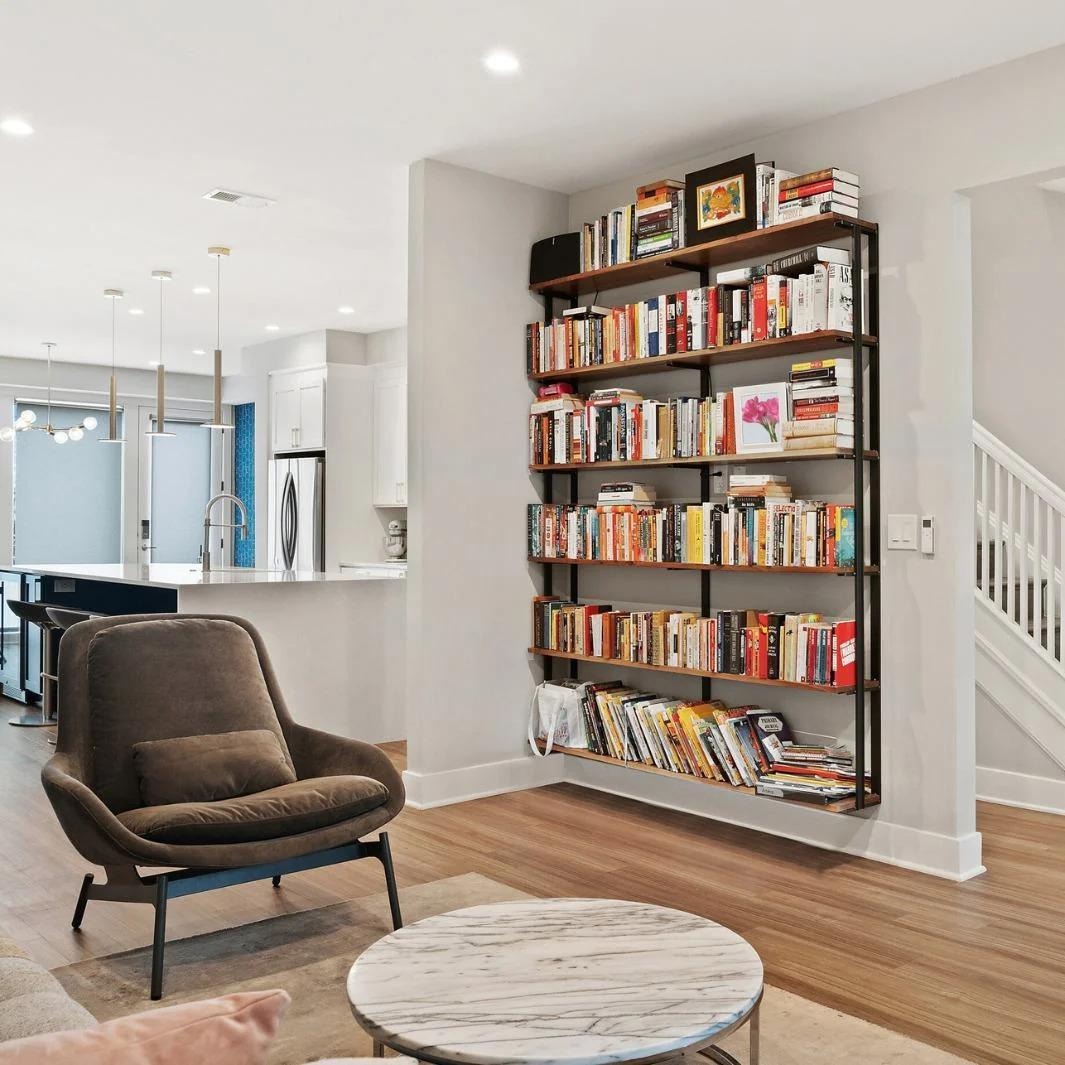
Most walls in a home are treated as empty space for artwork, mirrors, or paint. But with the right design, a feature wall can do much more. It can display books and décor while adding useful storage without taking up valuable floor space. Read more about character to a modern home.
The key is finding the right balance between function and style. Shelf size, materials, mounting, spacing, and what you plan to store all matter. In this guide, we’ll cover how to plan a functional feature wall that looks intentional and works for everyday life.
What is a functional feature wall?
A functional feature wall combines visual impact with a practical purpose. Instead of simply adding color, wallpaper, or artwork to one wall, it uses the available vertical space for storage, display, or everyday organization. Books, plants, ceramics, photographs, media equipment, and other essentials can become part of the design rather than adding clutter elsewhere in the room.
The best functional walls are planned around how the room is actually used. A living room might need shelving for books and décor, while a home office may benefit from space for files and equipment. Wall shelves work particularly well because they provide storage without taking up floor space and can be arranged to suit the size, layout, and style of almost any room.
Why wall-mounted shelves beat paint and freestanding units
Paint is cheap, but it gives you nowhere to put anything. A freestanding bookcase stores plenty, yet it eats floor space and rarely fits the wall it stands against. Wall mounted shelves sit neatly between the two.
- They free the floor – Nothing touches the ground, so small rooms feel bigger, and vacuuming takes half the time.
- They fit the wall you have – Made-to-order shelves commonly run from 12 to 96 inches long, and runs can sit side by side on wider walls.
- They carry real weight – A heavy-duty steel bracket system can be rated for about 50 lbs per linear foot when brackets sit 24 inches apart or less.
- They change with you – Swap what’s on display, and the wall looks new. No repainting.
How to plan a feature wall in 5 steps
Planning a wall-mounted shelf is very easy. Just follow these simple steps, and you are all set for the installation:
- Pick the wall – Choose the one you face when you walk in, or the one behind the sofa, bed, or desk. Skip walls chopped up by doors.
- Give it a job – Library, display, media wall, bar, workspace? The job decides shelf depth and how much weight the wall must carry.
- Measure twice – Note the width, the ceiling height, and where outlets, switches, and vents sit. Mark your studs too.
- Mock it up – Outline each shelf in painter’s tape and live with it for a day. You’ll spot problems fast.
- Choose materials last – Wood tone and bracket finish should answer to the floor and furniture already in the room.
You don’t have to guess. Ask the maker for a scaled rendering before you order, or try an online 3D shelf planner. Checking proportions on screen costs far less than patching drill holes.
Feature wall ideas for every room
The same shelving system behaves differently from room to room. Use this as a starting point, then adjust to what you own.
| Room | What the wall does | Shelf depth to try | One tip |
| Living room | Books, art, media | 10–12 in | Frame the TV instead of hiding it |
| Kitchen | Dishes, glassware, jars | 10–12 in | Keep daily items at arm’s reach |
| Home office | Files, tech, a wall mount desk | 12–14 in | Make the lowest shelf the work surface |
| Bedroom | Bedside or above-bed display | 8–10 in | Go shallow over the headboard |
| Dining room or bar | Bottles and glasses | 8–10 in | Group bottles by height |
| Nursery | Books, baskets, keepsakes | 8–10 in | Mount higher as your child grows |
How to choose the right wall shelves
Not all wall shelves are made equal. Here is how you can choose the right one:
Pick a wood that suits the room
Solid wood matters here. Veneer and particle board can sag under books. Four woods cover most styles:
| Wood | Look | Works well with |
| Knotty Alder | Warm, with visible knots | Rustic and contemporary rooms |
| Ash | Light and smooth-grained | Clean, modern spaces |
| Black Walnut | Rich brown, tight grain | Mid-century and formal rooms |
| Reclaimed Pine | Nail holes, saw marks, colour variation | Industrial and farmhouse looks |
Match the brackets to your hardware
Powder-coated steel brackets resist scratches and chipping better than paint. Black, brass and clear coat are common finishes. Echo your door handles or light fittings and the wall will look planned.
Get the size and bracket count right
Common shelf depths are 8, 10, 12 and 14 inches. As a working guide, bracket count follows shelf length:
- 12–42 in: 2 brackets
- 43–66 in: 3 brackets
- 67–90 in: 4 brackets
- 91 in and over: 5 brackets
Styling the wall so it looks intentional
Shelves up? Good. Now resist the urge to fill them.
- Group objects in odd numbers and vary their heights.
- Leave roughly a third of each shelf empty. Space reads as confidence.
- Put the heaviest things low and close to a bracket.
- Repeat one colour or material three times across the wall.
Three mistakes that ruin a feature wall
Installing a wall mounted shelf is easy. But you still need to be careful to ensure not messing anything up. Here are three common mistakes you must avoid.
- Shelves too shallow for the job – Measure your largest book or plate first. The wrong size self is not functional at all.
- Ignoring the wall itself – Drywall, plaster and masonry each need a different anchor, and many shelving kits don’t include any. Check before you drill.
- Overloading long spans – For a fully loaded bookshelf, keep brackets 24 inches apart or closer.
In a Nutshell
You don’t need to redesign an entire room to make a noticeable difference. Start with one wall and think about what you want it to accomplish, whether that’s displaying books and décor, adding storage, creating a workspace, or simply giving the room a stronger focal point.
Take the time to measure the space, choose shelves that suit what you plan to store, and consider how the materials and finishes work with the rest of the room. A well planned feature wall doesn’t need to be complicated or expensive. When it combines good design with something you genuinely use every day, it becomes a practical part of the room rather than just another decorative detail.



 Living Room
 Armchairs
 Bar
 Coffee Tables
 Sofas
 Side Tables
 Shelving
 TV Consoles
 Bedroom
 Beds
 Bedding Sets
 Dressers
 Mattress
 Pillows
 Wardrobes | Organisers
 Bathroom
 Bathroom Accessories
 Showers & Bathtubs
 Water Heaters
 Water Closet
 Washbasin
 Dining
 Dining Tables
 Dining Chairs
 Dining Sets
 Dining Benches
 Sideboards
 Kitchen
 Cookware | Bakeware
 Cabinets
 Tableware | Serveware
 Big Appliances
 Small Appliances
 Sinks | Taps
 Storage | Organisation
 Utensils | Tools
 Lighting
 Ceiling Lights
 Table | Floor Lamps
 Light Bulbs | Hardware
 Outdoor Lighting
 Wall Lights
 Kids & Nursery
 Nursery furniture
 Kids Bedroom
 Kids Decor

 Chairs
 Swivel
 Visitors
 Tables | Desks
 Standard Desks
 Executive Desks
 Computer Desks
 Safe | Cabinets
 Bookshelves
 Credenzas
 Filing Cabinets
 Safes
 Lockers
 Conference
 Boardroom Sets
 Meeting Tables
 Seminar | Events
 Workstations
 Cubicle Workstations
 Open Workstations
 Reception
 Reception Desks
 Waiting Area
 School Furniture
 Classroom furniture
 Hostel Furniture
 Laboratory furniture
 Library Furniture

 Bistro Sets
 Metal Bistro Sets
 Rattan Bistro Sets
 Plastic Bistro Sets
 Wooden Bistro Sets
 Rattan
 Rattan Bar Sets
 Rattan Sofas
 Rattan Dining Sets
 Rattan Loungers
 Rattan Swing Chairs
 Rattan Accessories
 Shades & Canopies
 Cantilever Umbrellas
 Parasols
 Tents
 Gazebo
 Outdoor Essentials
 Outdoor Living
 Plants & Greenery
 Planters & Pots
 Garden Tools

 Appliances
 Cleaning Appliances
 Cooling & Air Treatment
 Home Finishing
 Carpets & Rugs
 Curtains & Blinds
 Décor
 Doors & Shades
 Paint & Wall Covering
 Plumbing Supplies
 Tools & Utility
 Hardware & Electricals
 Tools & Equipment
 Commercial & Specialty
 Hospital Furniture
 Supermarket
 Salon & Personal Care
 Cleaning Services
 Pet Care